Mushroom Skillet With Thyme And Cream
A practical step-by-step guide to mushroom skillet with thyme and cream, including preparation, instructions, common issues, tips, and next steps.
Mushroom Skillet With Thyme And Cream
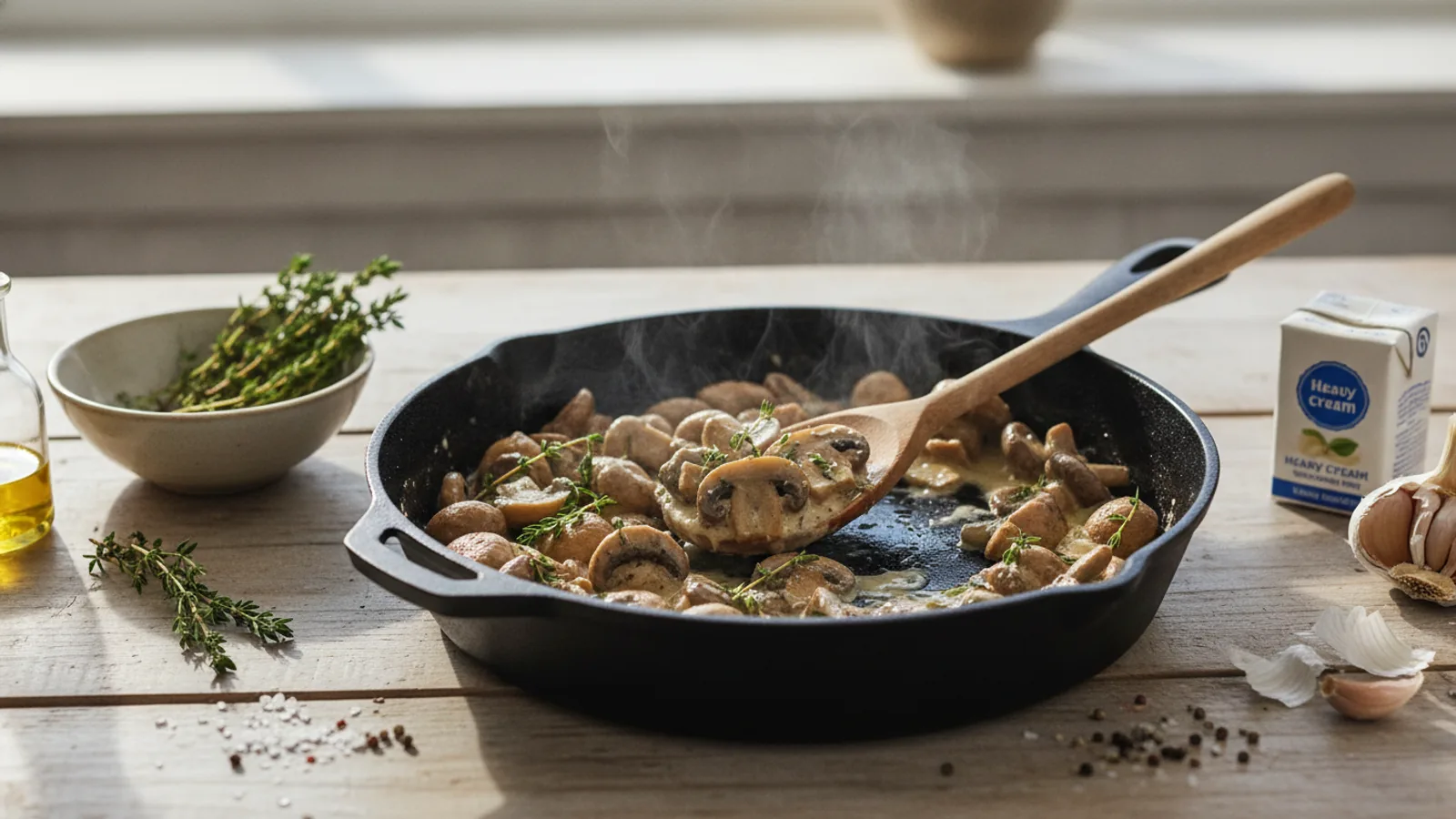
A complete guide to making a savory mushroom skillet with thyme and cream, covering mushroom selection and cleaning, proper searing technique, building a silky pan sauce, and adjusting the dish for different textures and serving styles. The method focuses on controlling moisture so the mushrooms brown instead of steam, then finishing them in a thyme-scented cream sauce that clings to every slice.
Fast Answer
- Heat a wide skillet over medium-high heat, sear cleaned mushrooms in a single layer with butter or oil until deeply browned, then lower the heat before adding thyme and cream.
- Finish the sauce gently for a few minutes until it thickens enough to coat a spoon, then taste and adjust salt and pepper right before serving.
Before You Start
- Choose firm mushrooms with dry caps and no sliminess; cremini, button, or oyster types all work, but avoid any that feel spongy or smell sour.
- Clean mushrooms with a damp cloth or a quick rinse followed by thorough drying, because excess surface water steams them and blocks the browning you want.
- Pick fresh thyme leaves from the stems and chop them finely, or use a smaller amount of dried thyme since its flavor is more concentrated.
- Measure cream, butter, and salt within reach before heating the pan, so the cooking moves quickly once the mushrooms start to brown.
Step-by-Step Instructions
Clean and dry the mushrooms properly
Wipe each mushroom with a damp cloth or give them a fast rinse under cool water, then dry them completely with a clean towel or paper towel. Trim only the tough, dry end of the stem and leave the rest intact so the slices hold their shape. Cut larger mushrooms into even slices about a quarter inch thick, keeping the pieces similar in size so they cook at the same rate. Spread them on a tray and let them sit for a few minutes while the pan heats. This drying step matters because surface water turns to steam in the pan and lowers the temperature, which prevents the deep brown crust that gives the dish most of its flavor. If the mushrooms still feel wet when they hit the pan, they will slide around and release liquid instead of searing.
Heat the pan and pre-sear in batches
Place a wide skillet over medium-high heat and let it come up to temperature for about two minutes. Add a spoon of butter or a thin film of oil and swirl it so the base is coated. Test the heat by dropping in one mushroom slice; it should sizzle at once without the butter turning dark brown. Add mushrooms in a single layer with clear space between the pieces and cook without stirring for two to three minutes. Let them develop a golden edge before you flip them. Work in batches if your skillet is smaller than the pile of mushrooms, moving finished batches to a plate. This order matters because a crowded pan traps steam, and a hot, uncrowded surface is what creates browning rather than a pale, watery result.
Brown the second side and season lightly
Turn the mushrooms and cook them for another two to three minutes until both sides show an even, deep golden color. Sprinkle a small pinch of salt now rather than at the start, because early salt draws out moisture and can slow browning. Add a little more butter if the pan looks dry, and tilt the skillet so the fat reaches every piece. Listen for a steady sizzle; a quiet pan usually means the heat is too low or the mushrooms are releasing water. If liquid pools around the slices, raise the heat briefly and let it cook away before you continue. This check tells you whether the surface is dry enough to brown, and browning is where the roasted, savory flavor of the finished sauce begins.
Add thyme and lower the heat
Scatter the fresh thyme leaves over the mushrooms and stir for about thirty seconds, just until the herbs smell fragrant and slightly toasted. Then reduce the heat to medium-low before any cream goes into the pan. The thyme needs only a brief moment in the hot fat to release its oils; longer cooking on high heat makes it bitter and dull. If you are using dried thyme, crumble it between your fingers first and add a smaller pinch. Stir once to distribute the herbs evenly among the slices. This step comes before the cream because herbs bloom in fat, while cream dilutes their aroma. Lowering the heat first also protects the cream from scorching when it is added next and keeps the sauce smooth.
Pour in the cream and build the sauce
Pour the cream into the skillet around the edges rather than straight onto the mushrooms, then stir gently to combine. Let the sauce come to a gentle simmer over medium-low heat and cook for three to five minutes, stirring now and then, until it thickens enough to coat the back of a spoon. Scrape the browned bits from the base of the pan as you stir; those bits dissolve into the cream and deepen the flavor. If the sauce looks thin, keep simmering and it will reduce. If it seems too thick, add a splash more cream or a spoon of warm water. Avoid a hard boil, which can separate the cream and leave a grainy texture. The sauce should look glossy and coat each mushroom slice lightly.
Taste, adjust, and serve immediately
Taste the sauce and mushrooms together, not separately, then add salt and black pepper in small amounts until the flavor feels balanced. If the sauce tastes flat, a few drops of lemon juice or a small knob of cold butter stirred in at the end can brighten it. If it tastes too rich, loosen it with a spoon of warm water or a little more cream. Spoon the mushrooms and sauce onto warm plates or over toast, pasta, or grains, and garnish with extra thyme if you like. Serve right away, because a cream sauce tightens and turns dull as it cools. Warm plates keep the dish at its best through the meal.
Quick Reference
| Situation | Action | Why it helps |
|---|---|---|
| Mushrooms are releasing a lot of liquid and will not brown. | Raise the heat to medium-high, spread the slices into a single layer, and cook without stirring until the liquid evaporates, then continue browning. | Trapped moisture keeps the pan temperature low, and letting it cook off restores the dry, hot surface needed for browning. |
| The cream sauce looks thin after several minutes of simmering. | Keep the pan uncovered at a gentle simmer and stir frequently, checking every minute until the sauce coats the back of a spoon. | Slow evaporation concentrates the cream and thickens it without the risk of scorching that high heat would bring. |
| The finished dish tastes heavy or one-dimensional. | Stir in a few drops of lemon juice or a small piece of cold butter off the heat, then taste again before adding more salt. | A touch of acid or fresh fat lifts richness and makes the thyme and mushroom flavors easier to notice. |
Common Issues
- Mushrooms turn soggy and pale instead of golden.: Dry the mushrooms thoroughly, heat the pan longer before adding them, and cook in batches so the slices never overlap. A crowded pan traps steam and stops browning, so give each piece room and wait until the underside is deeply colored before flipping.
- The cream sauce separates or looks grainy.: Lower the heat before adding cream and keep the sauce at a gentle simmer rather than a boil. If it separates, remove the pan from the heat and whisk in a spoon of cold cream or a small piece of butter until the sauce comes back together smoothly.
- The thyme flavor disappears or turns harsh.: Add fresh thyme late in cooking, after the mushrooms have browned, and give it only about thirty seconds in the fat. Dried thyme should be used sparingly and crumbled before it goes in, since its flavor is stronger and can overpower the cream.
Advanced Tips
- Mix two or three mushroom types for deeper flavor, using firm varieties for browning and softer ones for a silky texture in the sauce.
- Deglaze the pan with a spoon of dry white wine or a splash of broth before the cream, scraping up the browned bits for a more layered sauce.
- Finish with a sprinkle of fresh parsley or chives just before serving to add a clean, bright note against the rich cream.
Final Checklist
- Mushrooms are cleaned, dried, and sliced into even pieces before the pan heats.
- Skillet is hot, mushrooms are in a single layer, and both sides are deeply browned.
- Thyme is added briefly, heat is lowered, and the cream simmers to a coating consistency.
- Salt, pepper, and acidity are tasted and adjusted, then the dish is served on warm plates.
FAQ
Can I use dried thyme instead of fresh?
Yes, but use roughly one third of the amount and crumble it between your fingers before adding it. Dried thyme is more concentrated, so a little goes a long way, and it benefits from a brief moment in the warm fat to soften and release its flavor.
What should I serve with this mushroom skillet?
The sauce pairs well with toasted bread, pasta, polenta, rice, or mashed potatoes, all of which soak up the cream. A simple green salad or roasted vegetables on the side balances the richness and adds a fresh contrast to the meal.
How should I store and reheat leftovers?
Cool the dish quickly, transfer it to a shallow container, and refrigerate it within two hours of cooking. Reheat gently in a skillet over low heat with a splash of cream or water, stirring until the sauce loosens, since high heat can make the cream separate.