Choose Unsweetened Tomato Passata In UK Shops
A practical step-by-step guide to choose unsweetened tomato passata in UK shops, including preparation, instructions, common issues, tips, and next steps.
Choose Unsweetened Tomato Passata In UK Shops
This guide explains how to choose unsweetened tomato passata in UK shops. It covers label reading, ingredient checks, texture and aroma cues, and storage so you can buy a plain tomato product without added sugar, sweeteners, or unnecessary extras. You will learn what to look for on the front and back of the pack, how to compare options calmly, and how to check your choice at home.
Fast Answer
- Look for a short ingredients list that names tomatoes and perhaps salt or citric acid, with no sugar, glucose, fructose, or sweetener listed.
- Turn the pack over and read the nutrition panel for carbohydrates and sugars; if sugars are higher than a plain tomato would suggest, keep looking.
Before You Start
- Before you shop, decide whether you want plain passata for cooking or a flavoured version, because only plain styles are likely to be unsweetened.
- Bring a note of any dietary needs, such as low salt or no added acid, so you can compare labels without guessing in the aisle.
- If you use a shopping list, add the exact words you will look for on labels, such as tomato, salt, and citric acid, and the words you will avoid.
- Set aside a few extra minutes for label reading, because passata packs can look similar while their ingredient lists differ.
Step-by-Step Instructions
Start with the ingredients list
Pick up the pack and turn it to the ingredients list. Read every word in order. Unsweetened passata normally lists tomatoes first, and may list salt, citric acid, or a similar acidity regulator. If you see sugar, glucose, fructose, dextrose, maltose, honey, molasses, or any sweetener name, put it back if you want unsweetened passata. Check for flavourings, herbs, or vegetables that would make it a sauce rather than plain passata. This check matters because the front label often uses words like natural or classic, which do not tell you whether sweetening was added. The ingredients list is the clearest place to confirm what is actually in the pack. Do this before you look at anything else so you do not talk yourself into a product that does not match your goal. If the list is long and hard to read, move to the next option.
Read the nutrition panel for sugars
Find the nutrition panel, usually on the back or side. Look at the row for carbohydrates and the row for sugars. Plain tomato passata will still contain some natural sugars from the tomatoes, so a number above zero is expected. The question is whether the sugar figure seems high for a simple tomato product. Compare several packs of the same size and type. If one pack shows a much higher sugar number than the others, and its ingredients list includes a sweetener or sugar, that is a clear mismatch for your goal. This check matters because natural tomato sugars and added sugars can appear in the same row, so you need the ingredients list to tell them apart. Use the panel to narrow your choices, then return to the ingredients list to confirm. If the panel is missing or unclear, treat that as a reason to keep looking.
Check the salt and acid levels
Look again at the ingredients list and the nutrition panel for salt and acidity regulators. Many unsweetened passata products include a small amount of salt for taste, or citric acid to manage acidity. This is normal and does not mean the product is sweetened. However, if you are trying to reduce salt, compare the salt figure across packs and choose the lower option that still meets your needs. If you see a large number of additives, ask yourself whether you need them for your cooking. This check matters because a product can be unsweetened yet still carry a lot of salt or other extras that change the flavour of your dish. Decide what matters most to you before you compare, so you are not choosing on one number alone. If the label uses different names for the same ingredient, read carefully and do not assume they are absent.
Assess texture and aroma cues
If the pack allows it, look at the product through a clear window or check the description on the label for words like thick, smooth, or strained. Unsweetened passata is usually a smooth tomato puree with a fresh, cooked-tomato smell when opened. When you get it home, open the pack and smell it before you cook. A plain tomato aroma with no perfume, vanilla, or candy notes is a good sign. Pour a small amount into a bowl and look at the colour and texture. It should look like tomatoes, not like a glossy sweet sauce. This check matters because added sweeteners and flavourings can change the aroma and mouthfeel, and your senses can catch what a label might not state clearly. If the smell seems artificial or overly sweet, set it aside and use a different pack for your recipe. Trust your senses as a final check after reading the label.
Compare similar packs side by side
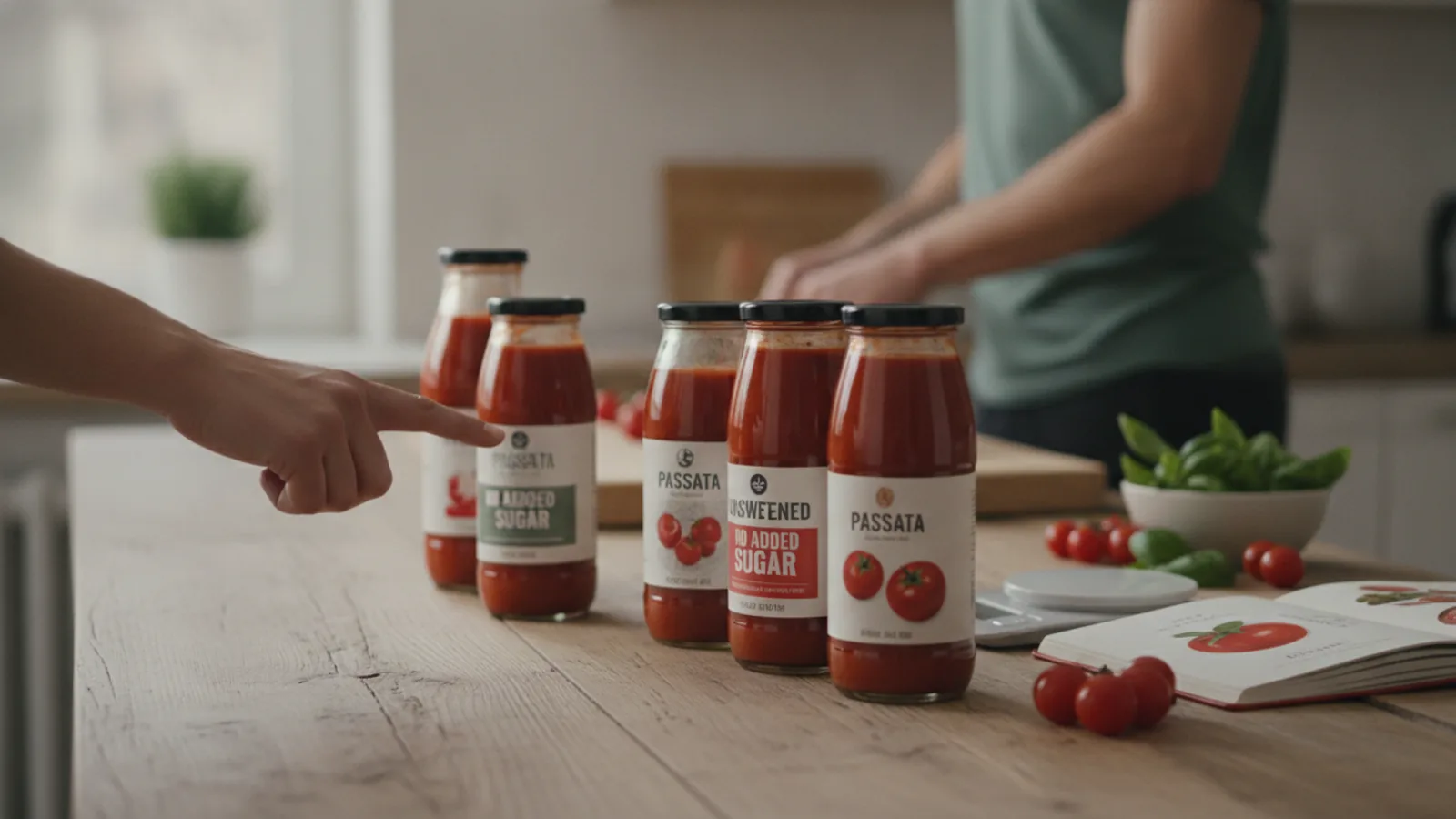
Gather two or three packs of the same size and type from the shelf. Place them side by side and compare the ingredients lists first, then the nutrition panels. Look for the pack with the shortest list of recognisable ingredients and no sweetener names. If the packs are the same type but one lists sugar and the other does not, choose the one without sugar. If both are unsweetened, compare the salt and sugar numbers to match your cooking needs. This check matters because front-of-pack claims can be similar while the back-of-pack details differ, and a side-by-side comparison makes those differences easy to see. Do not rely on memory; keep the packs together until you decide. If you cannot find a clear winner, choose the one with the fewest ingredients and the simplest description. Then put the others back where you found them.
Confirm your choice before you pay
Before you go to the till, hold the pack you have chosen and do one final read of the ingredients list and the nutrition panel. Confirm that no sugar, sweetener, or flavouring appears, and that the tomato content is described in a way that matches plain passata. Check the pack for damage, such as dents, leaks, or a broken seal, because a damaged pack may not store well. If the shop has a label or shelf sign that claims no added sugar, read it alongside the pack and make sure the two agree. This check matters because a final look catches mistakes made when you were comparing several products, and it helps you avoid bringing home something that does not match your goal. Once you are satisfied, place the pack in your bag and keep the receipt if you may need to return it. If anything seems wrong, choose another pack.
Quick Reference
| Situation | Action | Why it helps |
|---|---|---|
| You are standing in the shop and the front of the pack says natural or classic. | Turn the pack over and read the full ingredients list before you decide, then look at the nutrition panel for sugars. | Front-of-pack words are not a reliable guide to added sugar, so the back of the pack gives you the details you need to compare products. |
| Two unsweetened passata packs look almost the same and you cannot tell them apart. | Compare their ingredients lists side by side, then compare the salt and sugar figures on their nutrition panels. | A direct comparison shows small differences that are easy to miss when you look at one pack at a time, helping you choose the plainer option. |
| You have opened the pack at home and want to check it is plain passata. | Smell the product and pour a small amount into a bowl to check the colour, texture, and aroma before adding it to your recipe. | Added sweeteners and flavourings can change aroma and mouthfeel, so your senses provide a useful final check after label reading. |
Common Issues
- The ingredients list includes sugar but the front of the pack says no added sugar.: Read the full ingredients list and the nutrition panel again. If sugar appears as an ingredient, treat the pack as sweetened for your purposes and choose a different product. If the claim and the list disagree, ask shop staff or check the manufacturer's own product information before buying.
- The nutrition panel shows sugars but you cannot tell whether they are natural or added.: Look at the ingredients list for any sweetener names. If none appear, the sugars are likely from the tomatoes themselves. Compare the sugar figure with other plain passata packs of the same size. If the figure is much higher and you see a sweetener in the list, keep looking for a plainer option.
- The label is unclear, damaged, or missing the ingredients list.: Do not buy a pack with a missing or unreadable label if you need to confirm it is unsweetened. Choose another pack with a clear list, or check the shop's own product information. If you must buy it, open it at home and check the aroma and texture before using it in a recipe where plain passata matters.
Advanced Tips
- Keep a note on your own device of the passata products you have checked, listing the ingredients you saw, so future shopping trips are faster and more consistent.
- If you cook often, buy a plain unsweetened passata you like and use it as a base, then add your own salt, herbs, or garlic at home to control the flavour.
- When a recipe calls for a specific texture, check whether the passata is described as smooth, strained, or thick, because these words can point to differences in how the product behaves in cooking.
Final Checklist
- The ingredients list names tomatoes and does not include sugar, syrup, honey, or any sweetener.
- The nutrition panel has been read and you understand that some sugars may come naturally from the tomatoes.
- The pack is undamaged, in date, and has a clear label that you could read in the shop.
- You have compared at least one other similar pack so your choice is based on a direct comparison.
FAQ
Is all tomato passata unsweetened?
No. Passata is simply a tomato product, but some brands add sugar, sweeteners, or flavourings. The only reliable way to know is to read the ingredients list and the nutrition panel on each pack. If you want unsweetened passata, look for a short list that names tomatoes and perhaps salt or citric acid, with no sweetener words. If you are unsure, compare packs side by side and choose the one with the fewest added ingredients.
What words should I look for on the label?
Look for tomato as the first ingredient, and check for salt, citric acid, or similar acidity regulators, which are common in plain passata. Avoid packs that list sugar, glucose, fructose, dextrose, maltose, honey, molasses, syrups, or any sweetener name. Also watch for flavourings or added vegetables if you want a plain product. If a word is unfamiliar, check the manufacturer's own product information or ask shop staff before you buy, because label terms can vary between products.
How can I tell at home if the passata is unsweetened?
Open the pack and smell it. Plain passata should smell like cooked tomatoes, not like perfume, vanilla, or candy. Pour a small amount into a bowl and look at the colour and texture; it should look like tomatoes, not a glossy sweet sauce. If the aroma seems artificial or overly sweet, set it aside for a different use. Your senses are a useful final check, but they do not replace the label. If you are still unsure, keep the receipt and check the manufacturer's information.