Choose A Vegetable Steamer That Fits A Saucepan
A practical step-by-step guide to choose a vegetable steamer that fits a saucepan, including preparation, instructions, common issues, tips, and next steps.
Choose A Vegetable Steamer That Fits A Saucepan
A vegetable steamer that fits a saucepan lets you cook vegetables evenly on your stovetop without buying a separate appliance. The key is matching the steamer's diameter and base design to your saucepan so it sits securely and traps steam. This guide walks you through measuring your pan, checking the steamer's fit and material, testing it safely with water, and maintaining it so it lasts. You will also learn how to handle common fit problems and when a simple steamer insert is a better choice than a collapsible basket. By the end, you will know exactly what to look for in a store or online listing and how to confirm the steamer works with the pans you already own.
Fast Answer
- Measure the inside diameter of your saucepan at the rim, then choose a steamer that is slightly smaller so it rests on the rim or sits inside without wobbling.
- A steamer with a flat base and small feet works best because it stays stable and lets steam circulate around the vegetables.
Before You Start
- Gather a tape measure or ruler, your saucepan, and a note of its inside diameter so you can compare steamer sizes accurately.
- Check whether your saucepan has a flat or rolled rim, because this affects how a steamer rests on top or inside the pan.
- Decide how many vegetables you usually cook at once, since a larger batch needs a deeper steamer with more surface area.
- Clear a safe spot on your counter near the stove for testing the steamer with water before you cook food in it.
Step-by-Step Instructions
Measure your saucepan's inside diameter
Place your saucepan on a flat surface and use a tape measure or ruler to find the inside diameter across the top opening, from one inner rim to the other. Write this number down. Next, measure the depth from the rim to the bottom to understand how much space a steamer can occupy. A steamer that is too wide will wobble or fall in, and one that is too narrow will let steam escape around the edges. This measurement is the single most important number for choosing a steamer that fits. If your pan has a rolled rim, measure just inside that rim because the steamer will rest there or sit just below it. Check the measurement twice to avoid a mistake, and bring the number with you when shopping or compare it to the product description online.
Choose a steamer type that matches your pan
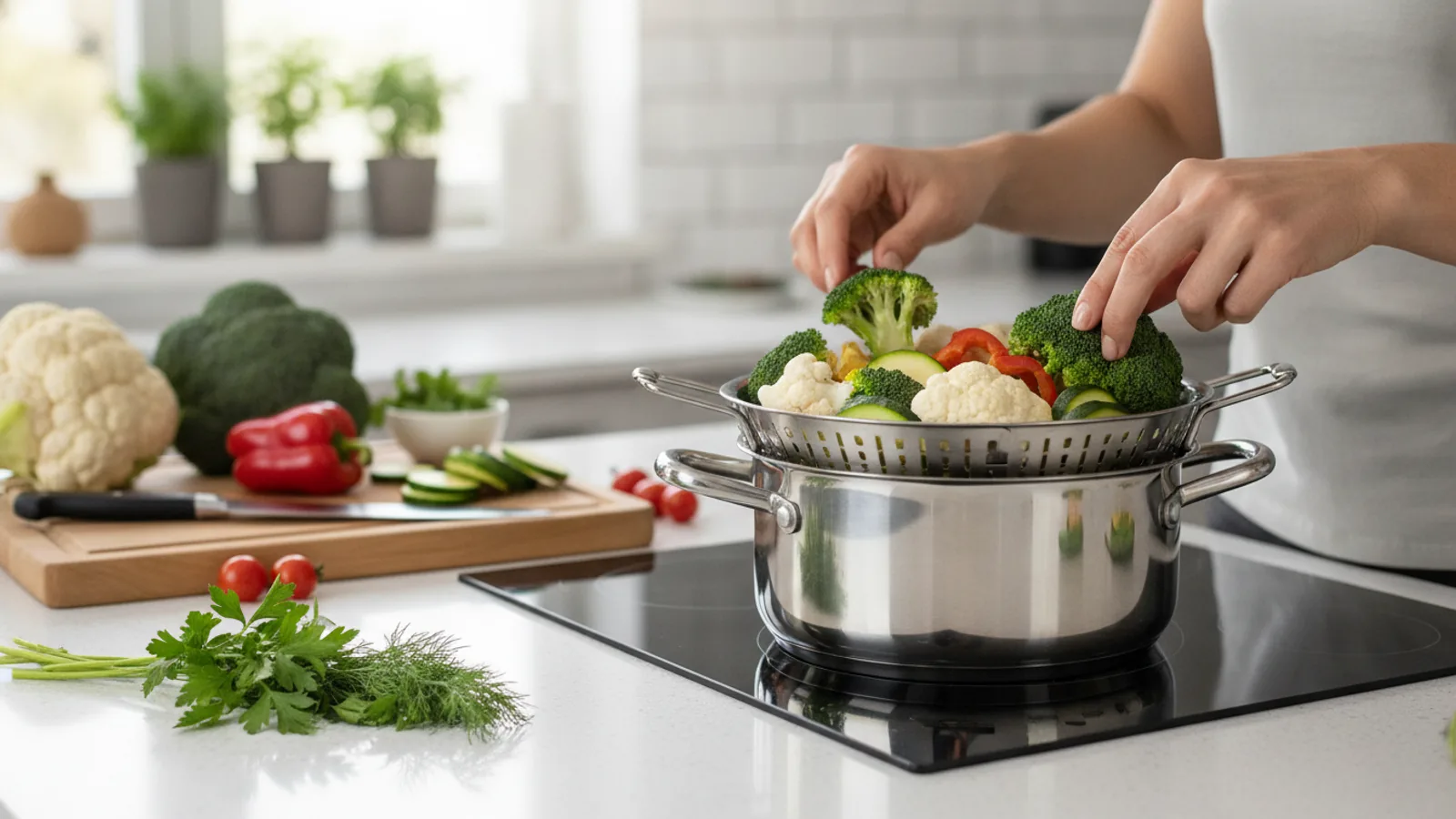
There are several steamer styles: a metal or silicone collapsible basket, a perforated metal insert, a stackable tiered steamer, and a simple folding steamer that opens like a flower. For a single saucepan, a collapsible basket or a perforated insert that rests on the rim is usually the easiest to use because it stores flat and adjusts to slightly different pan sizes. A tiered steamer can be useful if you often cook large amounts, but it needs a pan wide enough to support the base. Consider the material: stainless steel is sturdy and does not react with food, while silicone is lightweight and flexible but can stain with strong colors like turmeric. Read the product details to see the minimum and maximum pan diameter it supports, and check whether it has heat-resistant handles or feet. Pick the type that matches both your pan size and how you normally cook.
Check the fit and stability before cooking
Once you have a candidate steamer, set it into your saucepan without any water or heat. It should sit level and not rock when you press gently on one side. If it rests on the rim, the rim should support it evenly all around; if it sits inside, the base should touch the pan's sides or rest on a built-in ledge. A steamer that tilts will spill food or let steam escape, so stability matters as much as diameter. Test with the lid on your saucepan if you plan to cover it; the lid should close fully or rest on the steamer without gaps that let steam out. If the steamer has handles, make sure they do not prevent the lid from sitting properly. When you find a steamer that passes these checks, you know it will work safely on your stovetop.
Test the steamer with water before using food
Fill the saucepan with enough water to sit just below the steamer's base, usually about one to two fingers deep. Place the steamer in the pan, cover it with a lid, and bring the water to a boil over medium heat. Watch for steam escaping around the lid or the steamer's edges; a little is normal, but a lot means the fit is loose and you will need to add water more often. Let it steam for a few minutes, then carefully remove the lid away from you to avoid a burn. Check that the water is still simmering and has not boiled dry. This test shows you how quickly the water evaporates and whether the steamer stays put. It also lets you practice safe handling before you add vegetables. Adjust the heat so the water simmers steadily rather than boiling hard, which preserves water and cooks evenly.
Load and cook vegetables with the right technique
Cut vegetables into similar-sized pieces so they cook at the same rate. Arrange them in a single layer in the steamer, leaving small gaps for steam to rise. Do not pack them tightly, because crowded vegetables steam unevenly and take longer. Place the steamer in the saucepan over simmering water, cover with a lid, and start timing. Keep the heat at a steady simmer; a hard boil wastes water and can make the pan boil dry. Check doneness by piercing a piece with a sharp knife or fork; it should be tender but not mushy. If you need to add water during cooking, pour it carefully down the side of the pan, not over the food, and use hot water to keep the steam going. When the vegetables are done, remove the steamer carefully with oven mitts and serve them right away for the best texture and color.
Clean, store, and maintain your steamer
After the steamer has cooled completely, wash it by hand with warm soapy water and a soft sponge. Most metal and silicone steamers are not dishwasher safe, so check the care instructions before putting them in a dishwasher. Rinse well and dry thoroughly to prevent mineral spots or rust, especially on metal parts. If your steamer is collapsible, fold it according to the maker's directions and store it flat in a drawer or cabinet. Avoid stacking heavy pans on top of it, because that can bend the feet or perforated base. Once a month, inspect the steamer for loose handles, cracks in silicone, or bent metal that could make it unstable. If you notice damage, replace the steamer rather than risk a tip-over. Proper care keeps the steamer fitting your saucepan securely for many meals.
Quick Reference
| Situation | Action | Why it helps |
|---|---|---|
| You are standing in a store without your saucepan and need to choose a steamer quickly. | Use a tape measure on the spot to compare the steamer's listed diameter to a note of your pan's inside diameter, and look for an adjustable or collapsible model that covers a range of sizes. | An adjustable steamer is more likely to fit your pan at home, while a fixed size might be too wide or too narrow once you test it. |
| Your steamer wobbles on the saucepan rim and you worry about tipping. | Check whether the steamer has feet or a base ring that can be adjusted, and if not, return it for a model with a wider contact surface or a collapsible design that grips the rim. | A stable steamer prevents hot water and food from spilling, which reduces the risk of burns and makes cooking safer and less messy. |
| You want to steam a large batch of vegetables but your saucepan is small. | Cook in two smaller batches rather than overfilling the steamer, or use a deeper pot with a steamer insert that sits lower inside the pan and holds more food. | Overcrowding blocks steam flow and leads to uneven cooking, while batch cooking keeps every piece tender and properly cooked. |
Common Issues
- The steamer is too wide and falls into the saucepan.: Measure the pan's inside diameter again and choose a steamer that is at least two centimeters smaller, or switch to a collapsible model that adjusts to a smaller size. If the steamer has a rim rest, make sure it is designed for your pan's rim style.
- Steam escapes around the lid and the water boils dry too fast.: Check that the lid fits the saucepan and the steamer sits level. If steam still escapes, reduce the heat to a gentle simmer and add a little more hot water. A tight-fitting lid or a piece of heat-safe foil over the top can help trap steam without sealing completely.
- The steamer's feet scratch the bottom of the saucepan.: Look for a steamer with smooth, rounded feet or a silicone base, or place a heat-safe silicone mat or a small trivet under the steamer. Avoid metal feet that are sharp or bent, and never drag the steamer across the pan's surface.
Advanced Tips
- To speed up cooking, preheat the water in the saucepan before adding the steamer, but always keep the water level below the steamer base to avoid boiling the food.
- For delicate foods like fish or dumplings, line the steamer with a piece of parchment paper or a cabbage leaf to prevent sticking and to add a subtle flavor.
- If your saucepan has a thin base, use a heat diffuser between the burner and the pan to keep the simmer steady and reduce hot spots that can scorch the steamer's feet.
Final Checklist
- Measure your saucepan's inside diameter at the rim and write it down before you shop for a steamer.
- Confirm the steamer sits level and stable in the pan and that your lid closes fully over it.
- Test the steamer with water and a timer to learn how fast the water simmers away at your usual heat setting.
- Inspect the steamer for damage monthly and store it flat so the base and feet stay in shape.
FAQ
Can I use a steamer that is slightly larger than my saucepan?
A steamer that is slightly larger may rest on the rim instead of sitting inside, which can work if the rim is flat and the steamer is stable. However, a large steamer can also wobble or block the lid from closing. Measure the inside diameter and choose a steamer that is at least two centimeters smaller for the most secure fit. If you already own a larger one, test it with water before cooking to see whether it stays put and whether steam escapes around the edges. If it feels unsafe, return it or use it with a wider pot that matches its size.
How do I know if my steamer is safe to use on my stovetop?
Check the manufacturer's instructions for the maximum heat and whether it is safe for stovetop use. Most metal steamers are fine over gas or electric burners, but silicone parts may have a temperature limit. Always test the steamer with water first, and never let it sit on a dry pan over high heat. Make sure the steamer does not touch the burner or the pan's sides in a way that could melt or scorch. If you are unsure, contact the maker or retailer with your pan's measurements and your stovetop type, and follow their guidance before cooking.
What should I do if the steamer does not fit any of my saucepans?
If no saucepan works, consider a collapsible steamer that adjusts across a range of diameters, or a steamer insert that sits inside a larger pot you already own. You can also use a heat-safe colander or a metal strainer that fits your pan, as long as it is stable and does not touch the water. Measure each pan's inside diameter and compare it to the steamer's listed size range. If you cannot find a match, choose a steamer with a universal or adjustable design, and test it with water before you rely on it for a meal.