Crustless Spinach Quiche For Two
A practical step-by-step guide to crustless spinach quiche for two, including preparation, instructions, common issues, tips, and next steps.
Crustless Spinach Quiche For Two
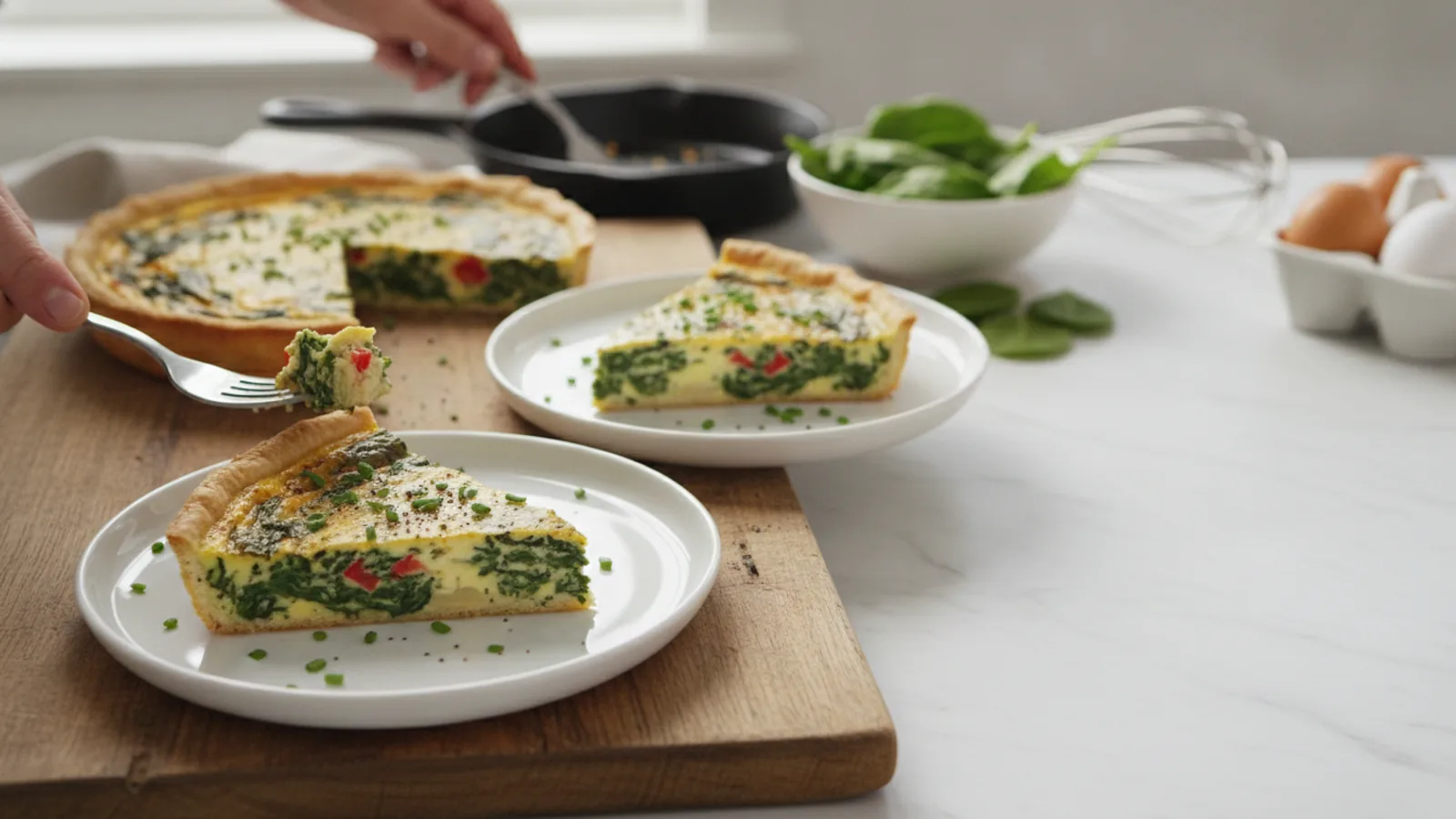
A crustless spinach quiche for two is a simple, satisfying meal that skips the pastry while keeping the creamy filling and savory spinach. This guide walks you through preparing a small-batch quiche in a standard 6-inch pan, with clear steps, practical checks, and tips for a tender, set custard. Perfect for a cozy breakfast, brunch, or light dinner, it comes together with basic ingredients and minimal fuss. You will learn how to avoid a watery or rubbery result, how to test for doneness, and how to adapt the recipe with what you have on hand. The instructions assume a conventional oven and a 6-inch round baking pan, but you can use a similar small dish with adjusted timing.
Fast Answer
- Preheat oven to 350°F (175°C). Mix 3 large eggs, 1 cup whole milk, 1 cup chopped cooked spinach (squeezed very dry), 1/2 cup shredded cheese, and seasonings. Pour into a greased 6-inch round pan and bake for 35–40 minutes until the center is just set.
- For the best texture, squeeze the cooked spinach in a clean towel until it stops dripping, and let the quiche rest for 10 minutes after baking. This prevents a soggy bottom and allows the custard to finish setting.
Before You Start
- Gather a 6-inch round baking pan or a similar small oven-safe dish, a mixing bowl, a whisk or fork, a cutting board, and a clean kitchen towel for squeezing spinach.
- If using fresh spinach, wash it well, then cook it briefly in a dry pan until wilted. If using frozen, thaw it completely and squeeze out as much liquid as you can.
- Measure 3 large eggs, 1 cup whole milk, 1/2 cup shredded cheese (such as cheddar or gruyère), and 1/4 teaspoon each of salt and pepper. Let the eggs and milk sit at room temperature for 10 minutes.
- Grease the baking pan lightly with butter or oil, or line it with parchment paper. Position an oven rack in the center of the oven and preheat to 350°F (175°C).
Step-by-Step Instructions
Prepare the spinach and preheat the oven
Start by preheating your oven to 350°F (175°C) and placing a rack in the center. While it heats, prepare the spinach: if using fresh, wash about 4 cups of leaves and cook them in a dry skillet over medium heat until they wilt, about 2 minutes. If using frozen, thaw about 1 cup and drain. Transfer the spinach to a clean kitchen towel, let it cool slightly, then twist the towel and squeeze firmly until no more liquid drips out. This step is crucial because excess water will make the quiche watery and prevent the custard from setting properly. You should end up with roughly 1/2 to 3/4 cup of dry, chopped spinach. Set it aside. A practical check: after squeezing, the spinach should feel dry to the touch and hold together when pressed. If it still feels wet, squeeze again with a fresh towel. This ensures a firm, creamy texture rather than a soggy one. Now lightly grease your 6-inch round pan or line it with parchment.
Whisk the custard base until smooth
In a medium mixing bowl, crack 3 large eggs and add 1 cup whole milk, 1/4 teaspoon salt, and 1/4 teaspoon black pepper. Whisk vigorously for about 30 seconds until the eggs and milk are completely combined and slightly frothy. You do not need to incorporate air; the goal is a uniform mixture. A practical check: the liquid should be a consistent pale yellow with no streaks of egg white or pools of milk. If you see streaks, whisk a few more seconds. Why this matters: an uneven custard can bake into rubbery patches or curdled spots. For a richer quiche, you can substitute half-and-half for the milk, but keep the total liquid at 1 cup. If you want to add cheese now, stir in 1/2 cup shredded cheese after whisking. Taste a tiny drop of the raw custard to check seasoning, then adjust salt and pepper if needed. Remember that cheese adds salt, so be cautious. Set the bowl aside near your prepared pan.
Combine spinach and cheese with the custard
Add the squeezed, chopped spinach to the custard mixture. If you have not already added the cheese, add 1/2 cup shredded cheese now. Use a spatula or spoon to fold everything together gently until the spinach and cheese are evenly distributed. Do not beat the mixture; folding prevents excess air from creating bubbles that can cause the quiche to puff unevenly and then collapse. A practical check: the mixture should look thick and speckled with green, with no large clumps of spinach. If you see clumps, break them up with your spoon. Why this matters: even distribution means every slice has the same flavor and texture, and it helps the quiche bake evenly. At this point, you can also stir in optional add-ins like a tablespoon of chopped sun-dried tomatoes or a pinch of dried herbs. Just keep total add-ins small so the custard can still set. Give the mixture one final gentle stir, then pour it into your greased 6-inch pan. Use the spatula to spread it evenly and smooth the top. Tap the pan gently on the counter twice to release any large air bubbles.
Bake the quiche until just set
Place the pan in the preheated oven on the center rack. Bake for 35 to 40 minutes. Start checking at 30 minutes. The quiche is done when the edges are lightly golden and the center is just set, meaning it barely jiggles when you gently shake the pan. A knife inserted 1 inch from the edge should come out clean, but the very center may still look slightly moist. Why this check matters: overbaking causes the custard to curdle and become watery or rubbery, while underbaking leaves it runny. If the top browns too quickly, tent it loosely with foil. Oven temperatures vary, so if your quiche is not set at 40 minutes, continue baking in 5-minute increments, checking each time. Also, note that a 6-inch pan is small, so the quiche will rise slightly; that is normal. Do not open the oven door frequently, as drafts can cause uneven baking. When done, remove the pan from the oven and place it on a wire rack. The center will continue to cook from residual heat. Let it rest for at least 10 minutes before slicing; this allows the custard to firm up.
Cool, slice, and serve
After the quiche has rested for 10 minutes, run a thin knife or spatula around the edge to loosen it from the pan. If you used parchment, you can lift the quiche out by the paper. Place it on a cutting board. Use a sharp knife to cut it into two or four wedges. For clean slices, wipe the knife between cuts. A practical check: the quiche should hold its shape when sliced and the center should be firm but creamy. If it still seems liquid in the middle, return it to the oven for 5 more minutes, then cool again. Why this matters: slicing too early releases liquid and makes the texture mushy. Serve warm or at room temperature. Leftovers can be covered and refrigerated for up to 3 days. To reheat, place in a 300°F (150°C) oven for 10 minutes or until warm; avoid microwaving, which can make it rubbery. This quiche pairs well with a simple green salad or a slice of crusty bread. Enjoy your meal, and note that the flavor often improves after a few hours of chilling.
Store and reheat safely
If you have leftovers, let the quiche cool to room temperature within 2 hours of baking. Then cover it tightly or transfer slices to an airtight container and refrigerate. It will keep for up to 3 days. For longer storage, you can freeze individual slices wrapped in foil or plastic wrap for up to 2 months. To reheat from the refrigerator, place slices on a baking sheet in a 300°F (150°C) oven for 10 to 15 minutes, until heated through. From frozen, thaw overnight in the refrigerator, then reheat as above. A practical check: reheat until the internal temperature reaches 165°F (74°C) for safety, especially if you are serving to anyone at higher risk. Why this matters: proper cooling and reheating prevent bacterial growth and keep the texture pleasant. Avoid reheating in a microwave on high, as it can create hot spots and a rubbery texture. If you must use a microwave, use low power and short intervals. Always check that the center is hot, not just the edges. Discard any quiche left at room temperature for more than 2 hours. With these steps, you can enjoy your crustless spinach quiche for two safely and deliciously.
Quick Reference
| Situation | Action | Why it helps |
|---|---|---|
| The quiche center is still liquid after the recommended baking time. | Return the pan to the oven and bake in 5-minute increments, checking the center with a gentle shake each time, until it is just set. | Oven temperatures vary and the pan size affects baking time, so incremental checking prevents overcooking while ensuring the custard sets safely. |
| You want to add vegetables like mushrooms, peppers, or onions. | Cook the vegetables first to remove excess moisture, then squeeze or drain them well before folding into the custard. | Raw vegetables release water during baking, which can make the quiche soggy and prevent the custard from firming up properly. |
| The quiche has browned too much on top before the center is set. | Lay a piece of aluminum foil loosely over the top and continue baking until the center is done. | A foil tent shields the surface from direct heat, slowing browning while allowing the interior to cook through evenly. |
Common Issues
- The quiche turns out watery or has a pool of liquid at the bottom.: The most common cause is not squeezing enough liquid from the spinach. Next time, after cooking, wrap the spinach in a clean towel and squeeze until it is as dry as possible. Also, ensure you are using the correct ratio of milk to eggs; too much milk can cause a loose set.
- The texture is rubbery or spongy instead of creamy.: This usually happens from overbaking or overwhisking. Bake just until the center is barely set, and whisk the eggs and milk gently until combined rather than beating in air. Also, avoid using low-fat or skim milk; whole milk or half-and-half gives a smoother custard.
- The quiche has a bland flavor or the spinach tastes flat.: Season the custard more generously with salt and pepper, and consider adding a pinch of nutmeg, a clove of garlic, or a tablespoon of grated Parmesan. Also, taste the raw custard before baking and adjust. If using frozen spinach, it can be less flavorful, so add extra herbs or a squeeze of lemon juice after baking.
Advanced Tips
- For a silky custard, use an immersion blender to blend the eggs and milk with the spinach before baking, then stir in the cheese by hand. This creates a uniform green color and smooth texture.
- Bake the quiche in a water bath: place the greased pan inside a larger roasting pan, then pour hot water into the roasting pan until it reaches halfway up the sides of the quiche pan. This gentle, moist heat prevents cracking and curdling.
- Add a layer of flavor by spreading a thin layer of mustard or pesto on the bottom of the pan before pouring in the custard. This adds tang and helps prevent a soggy bottom.
Final Checklist
- Oven is preheated to 350°F (175°C) and a rack is positioned in the center.
- Spinach is cooked, cooled, and squeezed completely dry in a clean towel.
- Custard mixture is well combined but not overly beaten, and seasonings are adjusted.
- Quiche is baked until the center is just set, then rested for 10 minutes before slicing.
FAQ
Can I use frozen spinach instead of fresh?
Yes, frozen spinach works well. Thaw it completely, then squeeze out as much liquid as you can using a clean kitchen towel or your hands. One cup of frozen spinach, after squeezing, yields about the same amount as fresh cooked spinach. Make sure it is very dry to avoid a watery quiche.
How do I know when the quiche is fully baked?
The quiche is done when the edges are set and lightly golden, and the center barely jiggles when you gently shake the pan. A knife inserted 1 inch from the edge should come out clean. The very center may still look slightly moist, but it will set as it rests. If you want to be certain, check that the internal temperature reaches 160°F (71°C).
Can I make this quiche ahead of time?
Yes. Bake the quiche, cool it completely, then cover and refrigerate for up to 3 days. To serve, reheat in a 300°F (150°C) oven for 10 to 15 minutes, until warmed through. You can also freeze slices for up to 2 months; thaw overnight in the refrigerator before reheating. Avoid microwaving on high, as it can make the texture rubbery.