Baking Sweeteners And Biscuit Texture
A practical step-by-step guide to baking sweeteners and biscuit texture, including preparation, instructions, common issues, tips, and next steps.
Baking Sweeteners And Biscuit Texture
Sweeteners do more than add sweetness: they control how much water remains in the dough, when the biscuit sets, and how crisp or chewy the final texture becomes. This guide explains how different sweeteners affect spread, browning, and snap, and gives a repeatable method for baking consistent biscuits at home.
Fast Answer
- Use granulated sugar for crisp, thin biscuits and brown sugar or syrups for softer, chewier centers.
- Measure sweeteners by weight when possible, and chill dough if the biscuits spread too much.
Before You Start
- Read your recipe fully and note whether it calls for granulated, brown, powdered, or liquid sweetener.
- Bring butter and eggs to room temperature so they blend evenly with the sweetener.
- Preheat the oven and place a rack in the center position so heat reaches the biscuits evenly.
- Line baking sheets with parchment and set out a cooling rack before you begin mixing.
Step-by-Step Instructions
Choose the right sweetener for texture
Start by deciding the texture you want, because the sweetener you pick changes how the dough sets. Granulated sugar dissolves into a thin syrup during baking, which helps biscuits spread and become crisp. Brown sugar contains molasses, which holds moisture and keeps the center soft and chewy. Liquid sweeteners such as honey or syrup add water and brown faster, so they often produce darker, softer biscuits. Read the recipe and match the sweetener to the result you expect. If you substitute one for another, expect the spread and browning to change. A practical check is to compare the dough consistency before baking: a dough with liquid sweetener should look softer than one made with granulated sugar. That check matters because dough moisture predicts how much the biscuits will spread, and catching a too-soft dough early lets you chill it before baking.
Measure sweeteners accurately by weight
Accurate measuring keeps the sugar-to-flour ratio stable, which directly controls biscuit texture. Use a digital scale and set it to grams for the most consistent results. If you only have measuring cups, spoon the sweetener into the cup and level it with a straight edge rather than packing it down. Brown sugar is often packed, so press it firmly into the cup only when the recipe says packed. Liquid sweeteners should be measured in a lightly oiled cup so they release fully. A practical check is to weigh the empty bowl first, then add the sweetener and subtract the bowl weight. That check matters because a small excess of sugar adds water and increases spread, while too little sugar can leave biscuits dry and crumbly. Consistent measurement makes your results repeatable from batch to batch.
Cream butter and sweetener to the right stage
Creaming mixes air into the butter and partially dissolves the sweetener, which affects lift and spread. Use room-temperature butter that yields slightly to pressure but is not greasy. Beat the butter and sweetener together until the mixture looks lighter in color and has a soft, fluffy texture. Stop and scrape the bowl once or twice so no pockets of unmixed sugar remain. A practical check is to rub a small amount between your fingers: it should feel smooth, not gritty. That check matters because gritty sweetener means the crystals have not dissolved enough, which can leave a sandy texture and uneven browning in the baked biscuit. If the mixture looks separated, it is usually too warm; chill the bowl briefly and continue beating until it comes together again.
Adjust dough moisture and chill before baking
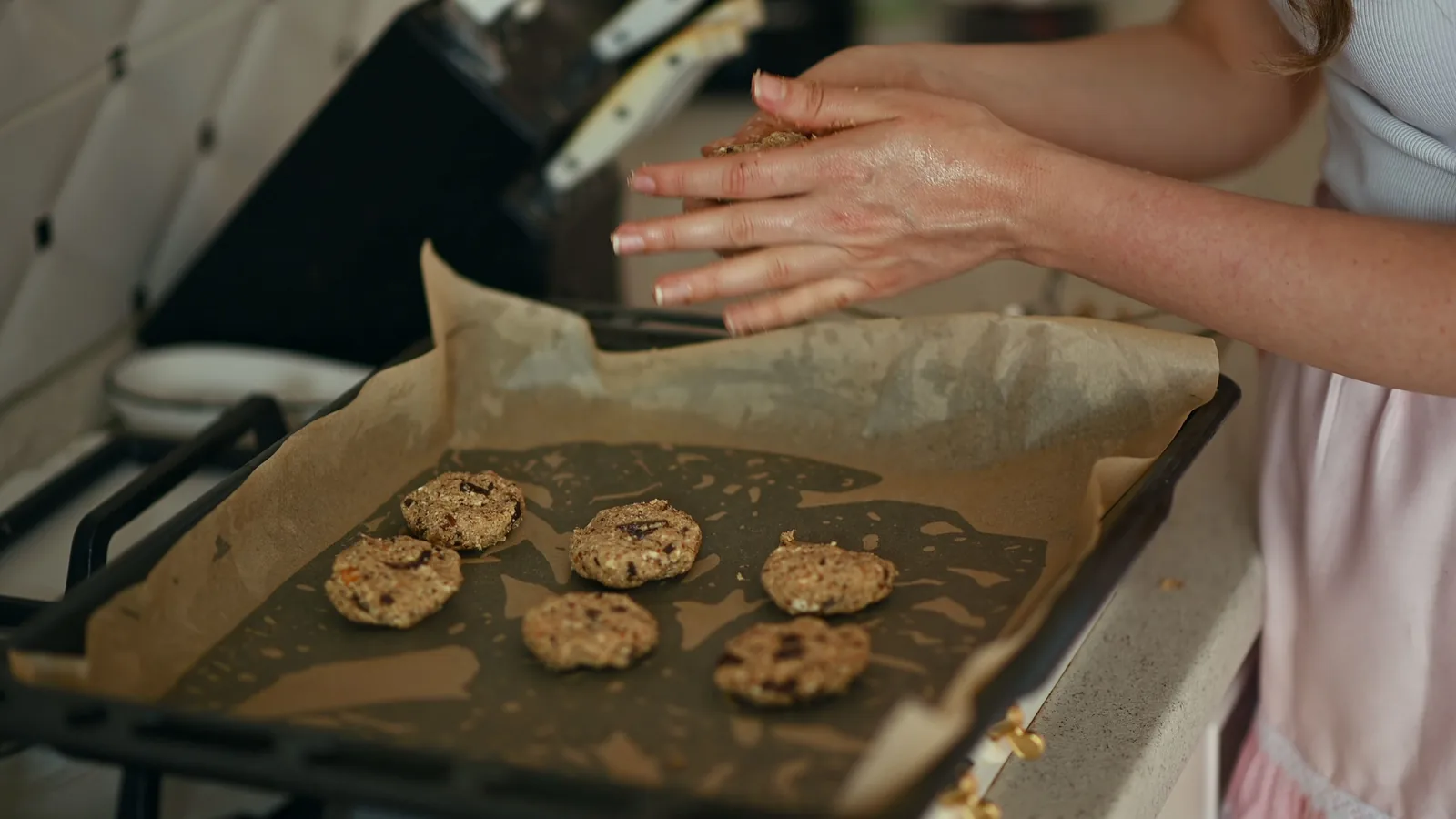
After mixing, judge whether the dough needs chilling. Dough made with brown sugar or liquid sweetener often feels soft and sticky, while dough made with granulated sugar may be firmer. Scoop a test portion and roll it gently; if it slumps or sticks heavily to your hands, chill the whole bowl for a short time. Cover the dough so it does not dry out. A practical check is to press a small ball with your fingertip: it should hold its shape with only slight give. That check matters because warm, soft dough spreads faster in the oven, producing thin, dark biscuits with crisp edges and underdone centers. Chilling firms the fat and hydrates the flour, which slows spread and gives a more even bake. Bake a single test biscuit first to confirm the dough behaves as you expect.
Bake and judge doneness by color and set
Place dough portions on a lined sheet with enough space for spread, then bake at the temperature your recipe specifies. Rotate the sheet halfway through if your oven browns unevenly. Watch the edges first: they usually set and color before the centers look firm. A practical check is to look for edges that are lightly golden and centers that look slightly underdone but no longer wet and shiny. That check matters because biscuits continue to firm as they cool on the hot sheet, and removing them at the right moment prevents both burning and a raw center. If the edges darken too quickly, reduce the oven temperature slightly and add a minute or two of baking time. If the centers stay pale and soft while the edges are already dark, your dough may contain too much liquid sweetener or need more chilling.
Cool, store, and evaluate the texture
Let biscuits rest on the baking sheet for a few minutes so they firm up, then move them to a cooling rack. Cooling matters because trapped steam can soften crisp biscuits if they are stored too soon. Once fully cool, break one open and check the interior: a crisp biscuit should snap cleanly, while a chewy one should bend slightly without crumbling. A practical check is to store a single biscuit in a sealed container overnight and taste it the next day. That check matters because sweeteners that hold moisture, such as brown sugar or honey, can make biscuits soften over time, while granulated sugar tends to keep them crisp. If they soften more than you like, store them with a small packet of food-safe desiccant or return them to a low oven briefly to dry out.
Quick Reference
| Situation | Action | Why it helps |
|---|---|---|
| Your biscuits spread too thin and darken at the edges. | Chill the dough for a short time, scoop smaller portions, and lower the oven temperature slightly before baking the next batch. | Cold dough and smaller portions slow spread, while a slightly lower temperature gives the centers time to set before the edges burn. |
| Your biscuits are dry and crumbly instead of chewy. | Switch part of the granulated sugar to brown sugar or a liquid sweetener, and check that you measured the flour accurately. | Brown sugar and liquid sweeteners hold moisture, and excess flour absorbs water that would otherwise keep the crumb tender. |
| Your biscuits taste grainy or have a sandy texture. | Cream the butter and sweetener longer until the mixture looks smooth, and scrape the bowl to catch unmixed crystals. | Longer creaming dissolves more sweetener crystals, which prevents gritty spots and encourages even browning. |
Common Issues
- Biscuits spread into flat, lacy sheets.: Chill the dough until firm, reduce the amount of liquid sweetener if the recipe allows, and check that your butter was not melted. Also verify your oven temperature with an independent thermometer, because a hotter oven melts fat faster and increases spread.
- Biscuits stay pale and soft in the center.: Increase baking time slightly, move the sheet to the center rack, and confirm the oven has fully preheated. If the dough is very moist from liquid sweetener, reduce that liquid a little next time or chill the dough longer before baking.
- Biscuits become sticky or soft after storage.: Cool them completely before sealing, then store them in a container with a small food-safe desiccant packet. If the recipe uses brown sugar or honey, expect some softening, and refresh crispness by warming them in a low oven for a few minutes.
Advanced Tips
- Try replacing a small portion of granulated sugar with glucose syrup to control crystallization and produce a smoother, glassier snap.
- Toast part of the sugar lightly in a dry pan before creaming it into the butter to add a deeper flavor without changing the total sweetener weight.
- Test your oven with an independent thermometer and note the difference from the set temperature, then adjust your baking time by that amount.
Final Checklist
- Confirm the sweetener type matches the texture you want: crisp, chewy, or soft.
- Weigh the sweetener or measure it carefully and level it without packing unless the recipe says packed.
- Cream the butter and sweetener until smooth, then chill the dough if it feels soft or sticky.
- Bake a single test biscuit, check the color and set, then adjust time or temperature for the full batch.
FAQ
Can I replace granulated sugar with honey in any biscuit recipe?
You can, but honey adds water and browns faster, so biscuits may spread more and darken sooner. Reduce other liquids slightly, lower the oven temperature a little, and bake a test biscuit first. Expect a softer, chewier texture rather than a crisp snap.
Why do my biscuits taste floury even when I follow the recipe?
A floury taste often means the sweetener and butter were not creamed enough, or too much flour was added. Cream until the mixture looks smooth, measure flour by weight if possible, and avoid packing it into the measuring cup. Resting the dough briefly can also help the flour hydrate.
How should I store biscuits made with different sweeteners?
Cool them completely, then store crisp biscuits in a loosely covered container and chewy ones in a tightly sealed container. Brown sugar and liquid sweeteners attract moisture, so expect gradual softening. If crispness fades, warm the biscuits in a low oven for a few minutes to dry the surface again.