Cool And Store Homemade Seed Crackers
A practical step-by-step guide to cool and store homemade seed crackers, including preparation, instructions, common issues, tips, and next steps.
Cool And Store Homemade Seed Crackers
A complete guide to cooling and storing homemade seed crackers so they stay crisp, flavorful, and safe to eat. You will learn how to cool them fully, choose the right container, manage moisture, and troubleshoot common problems like sogginess or stale taste.
Fast Answer
- Cool crackers completely on a wire rack until they reach room temperature and feel dry and crisp, then store them in an airtight container at room temperature.
- For longer storage, place cooled crackers in a freezer-safe bag with as much air removed as possible, label with the date, and freeze for up to three months.
Before You Start
- Gather your tools: a wire cooling rack, a clean kitchen towel, airtight containers or freezer bags, and a marker for labeling.
- Make sure your workspace is clean and dry, and wash your hands before handling the baked crackers to avoid adding moisture or germs.
- Check that your crackers are baked fully: they should look dry, feel firm, and sound hollow when tapped on the bottom.
- Decide how much you plan to eat soon versus store longer, so you can pack some for the counter and some for the freezer.
Step-by-Step Instructions
Cool crackers completely on a wire rack
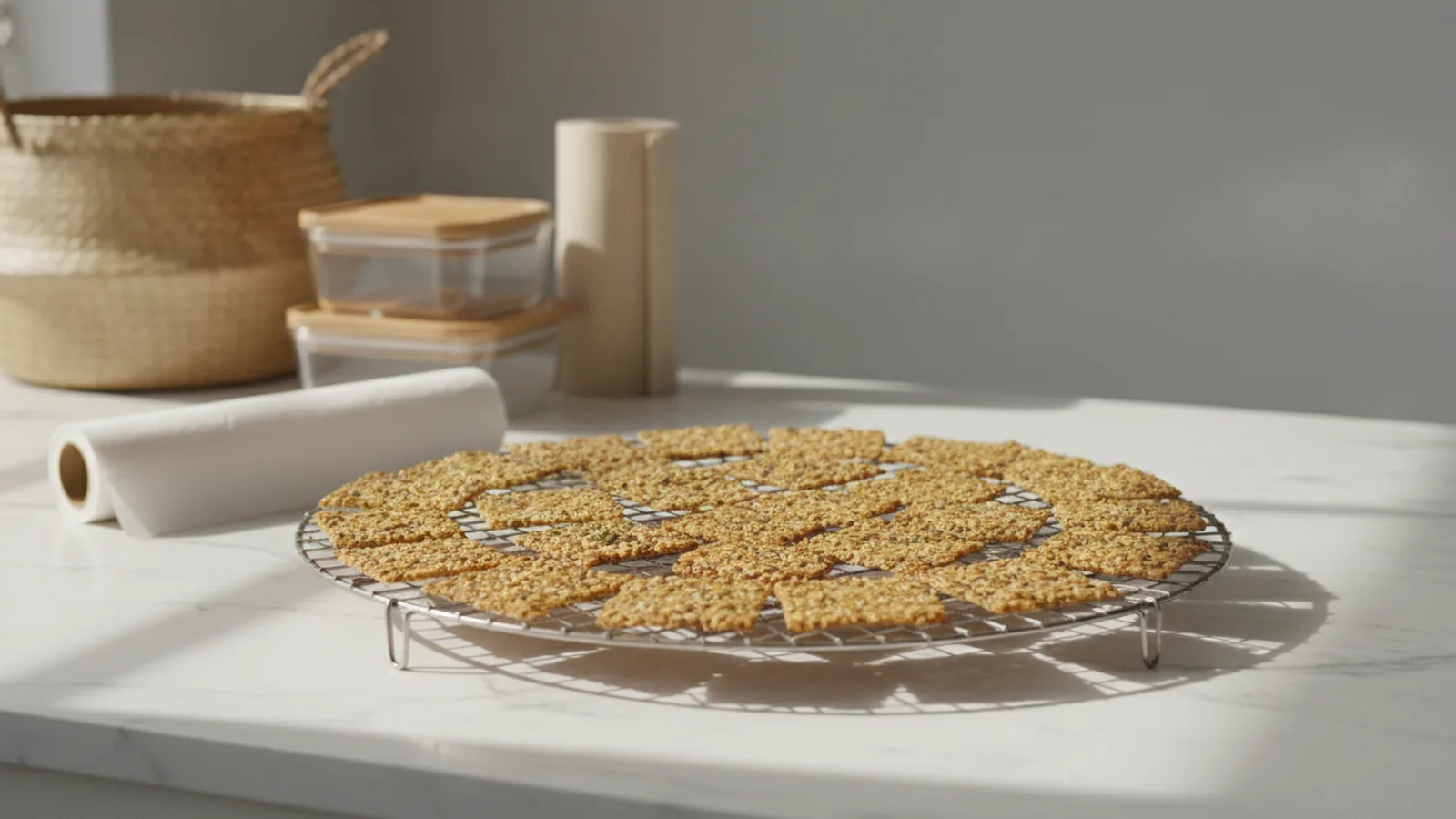
As soon as the crackers come out of the oven, slide them onto a wire cooling rack in a single layer. Do not stack them or leave them on the hot baking sheet, because the sheet holds heat and releases steam that can soften the bottoms. Let them sit at room temperature until they feel completely cool to the touch, which usually takes about twenty to thirty minutes. A practical check is to pick up one cracker and hold it against your cheek; if you feel any warmth, keep waiting. This check matters because packing even slightly warm crackers traps moisture inside the container, turning crisp crackers chewy and creating a friendly environment for mold. If your kitchen is very humid, point a small fan at the rack on low speed to speed up cooling and carry moisture away. Do not rush this step by putting crackers in the refrigerator; cold surfaces can cause condensation.
Test for doneness and crispness
Before you store anything, confirm that your crackers are truly dry. Pick up a few from different parts of the tray and tap them gently against the counter or your palm. A fully baked seed cracker should sound hollow and feel rigid, not bendy or soft in the middle. Break one open: the center should look dry and uniform, with no darker, doughy spots. If any crackers fail this test, return them to a low oven for a few more minutes, then cool them again on the rack. This check matters because underbaked crackers contain extra moisture that will shorten their shelf life and ruin the texture of the whole batch once they are sealed together. Pay special attention to thicker crackers or areas where seeds clumped, since those take longer to dry. Only move on to packing when every cracker passes the tap and snap test.
Choose the right airtight container
Select a clean, dry container that seals tightly. A glass jar with a rubber gasket, a sturdy plastic container with a locking lid, or a heavy-duty freezer bag with the air pressed out all work well. Avoid open bowls, paper bags, or containers with loose lids, because air and humidity move in and out freely. Before adding crackers, make sure the container is completely dry inside; even a few drops of water can soften the batch. A practical check is to fill the container with crackers, close it, and wait a few minutes, then open it and listen for a soft whoosh of air. That sound suggests a good seal. This check matters because a tight seal is your main defense against humid air, which is the most common reason homemade crackers lose their crunch. If your container has a rubber gasket, inspect it for cracks or bits of old food and wash it if needed.
Pack crackers with moisture control in mind
Fill your chosen container gently, leaving a little headspace at the top rather than cramming crackers to the lid. If you are using a bag, press out as much air as possible before sealing, or use a vacuum sealer if you have one and it is suitable for fragile items. For extra protection in humid conditions, place a small food-safe moisture absorber packet on top of the crackers, but only if it is designed for food storage and clearly labeled. Never let the packet touch the crackers directly if the instructions say to keep it separate. A practical check is to close the container, turn it upside down gently, and listen for crackers sliding and rattling; if they sound stuck together or mushy, you may have packed them too tightly or too soon. This check matters because crowded crackers can press against each other, trap moisture, and break. If you stack crackers, place a piece of parchment paper between layers.
Store at room temperature in a cool, dark place
Place your sealed container in a cool, dark spot such as a pantry shelf away from the oven, dishwasher, or direct sunlight. Heat and light can speed up the breakdown of oils in seeds, which makes crackers taste stale or rancid more quickly. A steady room temperature is best; avoid storing crackers above the refrigerator or next to a kettle, where warmth and steam are common. A practical check is to touch the shelf where you plan to store the container; if it feels warm, choose a different spot. This check matters because even a slightly warm location can shorten freshness and change the texture over time. If your home is very warm, consider keeping a smaller portion in the refrigerator in a truly airtight container, but let it come to room temperature before opening to avoid condensation on the crackers. Always keep the container closed except when serving.
Freeze for long-term storage and revive crispness
If you want to keep crackers longer than a few weeks, freeze them. Place fully cooled crackers in a freezer-safe bag or container, remove as much air as possible, and seal it tightly. Label the bag with the date and contents so you can track how long they have been stored. A practical check before freezing is to make sure the crackers are completely cool and dry; any warmth will create ice crystals inside the bag, which turn into moisture when thawed. This check matters because ice crystals are a hidden source of sogginess. When you are ready to eat them, take out only what you need, reseal the rest, and let the portion sit in the container at room temperature until fully thawed before opening. If thawed crackers feel soft, spread them on a baking sheet and warm them in a low oven for a few minutes, then cool completely again.
Quick Reference
| Situation | Action | Why it helps |
|---|---|---|
| You just baked crackers and want to pack them quickly. | Wait until they are completely cool on a wire rack, then place them in an airtight container and seal it. | Packing warm crackers traps steam, which makes them soft and can lead to mold. |
| Your stored crackers have lost their crunch after a few days. | Spread them on a baking sheet and warm them in a low oven for a few minutes, then cool completely on a rack before resealing. | Gentle heat drives out absorbed moisture and restores crispness without burning the seeds. |
| You live in a humid area and worry about spoilage. | Use a tightly sealed container, add a food-safe moisture absorber if appropriate, and store a smaller portion in the freezer. | Humidity is the main enemy of crisp crackers, so limiting air exposure and freezing extras protects quality. |
Common Issues
- Crackers turned soft and chewy after storage.: Spread them in a single layer on a baking sheet and warm them in a low oven for a few minutes. Let them cool completely on a wire rack, then store them in a fresh, dry, airtight container. Check that the original container was fully dry and sealed tightly.
- Crackers taste stale or slightly rancid.: Discard the batch if the smell or taste is unpleasant. Next time, store crackers in a cool, dark place away from heat and light, use airtight containers, and freeze any portion you will not eat within a few weeks. Label containers with dates so you can rotate your supply.
- Crackers stick together or break in the container.: Pack them in a single layer or separate layers with parchment paper. Do not overcrowd the container, and leave a little headspace. Handle the container gently, and if you freeze crackers, keep them flat and thaw them without shaking or dropping the bag.
Advanced Tips
- Toast seeds lightly before baking to deepen flavor and reduce surface moisture, which helps crackers stay crisp longer.
- Make a small batch of desiccant sachets using food-safe materials if your climate is humid, but always follow the manufacturer's instructions and keep them away from children and pets.
- Store different flavors in separate containers to prevent strong smells from mixing, and label each with the date and flavor.
Final Checklist
- Crackers are completely cool and sound hollow when tapped.
- Container is clean, dry, and seals tightly with a good gasket or lock.
- Crackers are stored in a cool, dark place away from heat and steam.
- Long-term portions are frozen flat, labeled with the date, and thawed at room temperature before opening.
FAQ
How long do homemade seed crackers stay fresh?
At room temperature in a truly airtight container, they usually stay crisp for one to two weeks. In the freezer, they can keep for up to three months. Check your own results by tasting one every few days, since humidity, seed type, and how dry the crackers were when stored all affect freshness.
Can I store crackers in the refrigerator instead of the freezer?
You can, but the refrigerator is often more humid than a pantry, so use a fully airtight container. Let the container sit at room temperature before opening to prevent condensation from forming on the cold crackers. For best texture, the freezer is usually a better choice for long storage, and the pantry is best for short storage.
What should I do if my crackers become soft after freezing and thawing?
Spread them on a baking sheet in a single layer and warm them in a low oven for a few minutes. Let them cool completely on a wire rack, then return them to a dry, airtight container. This works because gentle heat removes surface moisture, but avoid high heat, which can burn the seeds and change the flavor.