Choose Lower Sugar Pickles For A Pantry
A practical step-by-step guide to choose lower sugar pickles for a pantry, including preparation, instructions, common issues, tips, and next steps.
Choose Lower Sugar Pickles For A Pantry
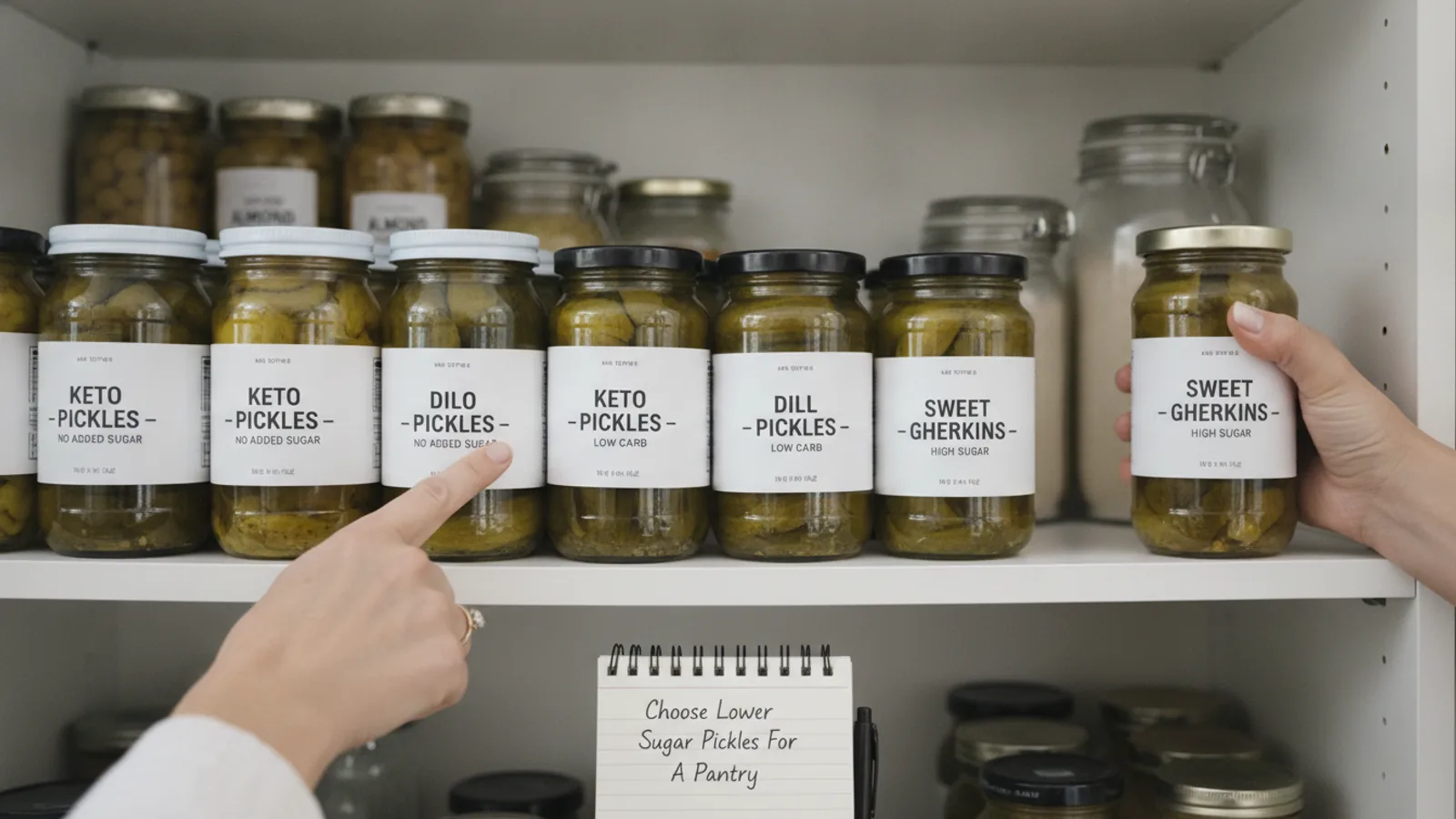
Choosing lower sugar pickles for a pantry helps you control sweetness while keeping the tangy crunch you enjoy. This guide shows you how to read labels, compare products, and stock shelves with options that fit your taste and nutrition goals. You will learn what to look for, what to avoid, and how to store pickles so they stay good for months.
Fast Answer
- Check the nutrition facts for total sugars per serving and compare similar products to find the lowest option that still tastes good to you.
- Look for pickles packed in water, vinegar, and salt rather than those with added sugar, corn syrup, or sweeteners listed in the first few ingredients.
Before You Start
- Gather a few jars of pickles you already like or are curious about so you can compare their labels side by side before buying more.
- Bring a notebook or use your phone to list the total sugars and added sugars from each label so you can rank them from lowest to highest.
- Set aside a clean, cool, dark shelf or cabinet for storage, because heat and light can affect flavor and texture over time.
- Plan a small taste test with family or friends to see which lower sugar pickles you actually enjoy, so you do not waste space on jars you will not eat.
Step-by-Step Instructions
Read the Nutrition Facts Panel First
Start by finding the Nutrition Facts panel on each jar. Look for the line that says Total Sugars and the line that says Added Sugars. Total sugars include naturally occurring sugars from the cucumbers and any added sugars. Added sugars are the ones put in during processing. Write down both numbers for each jar you are considering. This gives you a clear starting point for comparison. A pickle with less added sugar is often a better choice if you want to reduce sweetness. Remember that serving sizes can differ between brands, so compare the sugars per same weight or per same number of pieces. For example, if one jar lists sugars per one ounce and another per two ounces, adjust the numbers to match. This check matters because a jar that looks lower at a glance might actually be higher per actual serving you eat. Taking a moment to note these numbers prevents confusion later.
Scan the Ingredient List for Added Sweeteners
After the nutrition panel, read the ingredient list from top to bottom. Ingredients are listed by weight, so the first few items are the most plentiful. Look for words like sugar, high-fructose corn syrup, dextrose, maltose, honey, molasses, agave syrup, or fruit juice concentrate. These all add sugar. If any of these appear in the first three to five ingredients, the product likely has a noticeable amount of added sugar. Also watch for sweeteners like sucralose, aspartame, saccharin, or stevia. These are not sugar but can make pickles taste sweet. If you want to avoid both added sugars and artificial sweeteners, choose pickles where the main ingredients are cucumbers, water, vinegar, and salt. This check matters because a product can say 'no high-fructose corn syrup' but still contain other sugars. Reading the full list gives you the complete picture and helps you avoid hidden sweeteners.
Compare Similar Pickle Styles and Cut Sizes
Pickles come in many styles: dill, bread and butter, sweet, kosher, sour, and more. Cut sizes include whole, spears, chips, and slices. These choices affect sugar content. Bread and butter pickles are typically sweet and contain more added sugar. Dill and sour pickles are usually lower in sugar. Whole pickles and spears may have less surface area for brine to penetrate, but the brine recipe matters most. When comparing, try to compare the same style and cut. For example, compare dill spears to dill spears, not dill spears to sweet chips. This check matters because a low-sugar dill pickle might still have more sugar than a different brand's dill pickle, but comparing apples to apples helps you find the truly lowest option within a category you enjoy. If you love sweet pickles, look for reduced-sugar versions of that style rather than switching to a style you dislike. Enjoyment matters for long-term success.
Check the Serving Size and Number of Servings
Serving sizes on pickle jars vary widely. One jar might list a serving as one ounce, another as half a pickle, and another as three slices. To compare fairly, convert everything to a common unit. For example, find the sugars per 100 grams or per one ounce. You can do this by dividing the total sugars by the serving size in grams, then multiplying by 100 or by your desired amount. This step prevents you from being fooled by a small serving size that makes the sugar look low. Also check how many servings are in the jar. A jar with many small servings might seem lower in sugar per serving, but if you eat several servings at once, the total adds up. This check matters because your actual portion may be larger than the label's serving. Knowing the sugar per your typical portion helps you choose a pickle that fits your goals without feeling deprived.
Consider Sodium and Other Additives
Lower sugar does not automatically mean healthier. Pickles are often high in sodium because salt is used for preservation and flavor. Check the sodium line on the Nutrition Facts panel. If you are watching your blood pressure or salt intake, compare sodium levels too. Some lower sugar pickles may have more sodium to compensate for taste. Also look at additives like calcium chloride, which keeps pickles crisp, and polysorbate 80, which helps distribute flavors. These are generally recognized as safe, but some people prefer to avoid them. If you want a simpler product, look for pickles with a short ingredient list: cucumbers, water, vinegar, salt, and maybe natural flavors. This check matters because choosing a pickle is a balance of taste, sugar, sodium, and ingredients you are comfortable with. No single number tells the whole story, so review the whole label before deciding.
Taste Test and Store Your Choices Properly
After you bring home a few lower sugar options, do a small taste test. Try each pickle plain and note sweetness, saltiness, crunch, and overall flavor. You might find that a lower sugar dill pickle tastes just as good as your usual brand. Once you pick favorites, store unopened jars in a cool, dark place like a pantry shelf away from the stove or sunny windows. After opening, keep the jar in the refrigerator and make sure the pickles are fully covered by brine. Use a clean fork or spoon to remove pickles, not your fingers, to avoid introducing bacteria. Check the label for how long the pickles stay good after opening; many last several weeks or months in the fridge. This check matters because proper storage keeps pickles safe and crunchy. If you store them poorly, even the best low-sugar pickle can spoil or become mushy. Date the jar when you open it as a reminder.
Quick Reference
| Situation | Action | Why it helps |
|---|---|---|
| You are standing in the store aisle and want a quick way to compare two pickle jars. | Turn both jars to the Nutrition Facts panel and compare the Added Sugars line and the Total Sugars line, then check the serving size to make sure you are comparing the same amount. | Added sugars are the ones put in during processing, so a lower added sugar number usually means a less sweet pickle, and matching serving sizes prevents a misleading comparison. |
| You love sweet pickles but want to reduce sugar without giving up the flavor. | Look for reduced-sugar or no-sugar-added versions of bread and butter or sweet pickles, and read the ingredient list to see which sweeteners they use instead of sugar. | Reduced-sugar versions are made to taste similar to the original, so you can still enjoy the style you like while lowering your sugar intake, and knowing the sweetener helps you avoid ones you dislike. |
| You have opened a jar of lower sugar pickles and want to keep them fresh. | Put the jar in the refrigerator, ensure the pickles are covered by brine, and use a clean utensil each time you take some out; write the open date on the lid. | Refrigeration slows spoilage, covering with brine protects texture and flavor, and clean utensils prevent contamination, while the date helps you use them before quality drops. |
Common Issues
- The label says 'no sugar added' but the pickles still taste sweet.: Check the ingredient list for sweeteners like sucralose, stevia, or fruit juice concentrate. These can add sweetness without being called 'sugar' on the front label. If you want to avoid all sweeteners, choose a brand whose ingredients are only cucumbers, water, vinegar, and salt. Also note that cucumbers naturally contain a small amount of sugar, so a slight sweetness can be normal.
- You cannot find lower sugar pickles in your local store.: Look in the refrigerated section as well as the regular shelves, because some brands keep lower sugar options in different areas. You can also shop online for a wider selection, or make your own quick pickles at home by slicing cucumbers and covering them with vinegar, water, and salt. Homemade pickles let you control the sugar completely, and they can be ready in a day.
- The lower sugar pickles you bought became mushy or spoiled quickly after opening.: Make sure the pickles are always covered by brine and stored in the refrigerator after opening. Use a clean fork or spoon each time, and do not leave the jar out at room temperature for long periods. If the pickles were mushy before opening, the jar may have been stored in a hot place or past its best-by date. Check the date and the storage conditions, and consider buying smaller jars if you do not eat pickles often.
Advanced Tips
- If you are watching your sugar intake closely, look for pickles with fewer than two grams of added sugar per serving, but remember that your total daily intake matters more than any single food.
- Try making refrigerator pickles with a mix of vinegar, water, and a small amount of salt; you can add dill, garlic, or peppercorns for flavor without any sugar at all.
- When comparing brands, take a photo of the nutrition panels with your phone so you can review them later without having to remember all the numbers.
- If you enjoy sweet pickles, slice them and soak them in plain water for a few minutes, then drain; this can remove a little surface sugar, though the effect is modest.
Final Checklist
- Check the Nutrition Facts panel for Total Sugars and Added Sugars, and note the serving size.
- Read the ingredient list to spot added sweeteners like sugar, corn syrup, honey, or artificial sweeteners.
- Compare similar pickle styles and cut sizes so you are making a fair comparison.
- After opening, store pickles in the refrigerator, keep them covered in brine, and use clean utensils.
FAQ
Are lower sugar pickles always healthier?
Not necessarily. Lower sugar pickles can be a good choice if you want to reduce added sugars, but they may still be high in sodium. Some also contain artificial sweeteners or other additives. Health is about your overall diet, so consider how pickles fit into your meals and talk with a health professional if you have specific concerns. Reading the full label helps you make a choice that matches your priorities.
Can I make my own lower sugar pickles at home?
Yes, making refrigerator pickles at home is simple. Slice cucumbers and pack them into a clean jar. Heat a brine of vinegar, water, and salt until the salt dissolves, then pour it over the cucumbers. You can add dill, garlic, or peppercorns for flavor. Let the jar cool, then refrigerate. They are usually ready in one to three days and last several weeks in the fridge. This method lets you control sugar completely, and you can leave it out entirely.
How do I know if a pickle is low in sugar without reading every label?
You cannot know for sure without checking, but some clues help. Dill and sour pickles are generally lower in sugar than bread and butter or sweet pickles. Pickles packed in water and vinegar are often lower than those packed in syrup. However, brands vary, so the only reliable way is to read the Nutrition Facts panel and ingredient list. Once you find a brand and style you like, you can remember it for future shopping trips.