Choose A Fine Mesh Sieve For Nut Flour
A practical step-by-step guide to choose a fine mesh sieve for nut flour, including preparation, instructions, common issues, tips, and next steps.
Choose A Fine Mesh Sieve For Nut Flour
Choosing a fine mesh sieve for nut flour comes down to matching mesh opening, diameter, and build quality to the flours you actually bake with. A sieve that is too coarse leaves gritty bits in delicate cakes, while one that is too fine clogs quickly and slows your work. This guide walks through measuring mesh, inspecting construction, testing with real nut flour, and caring for the tool so it stays accurate for years.
Fast Answer
- Look for a sieve with a mesh opening around 40 to 60 openings per linear inch, a stainless steel screen, and a diameter that fits over your widest mixing bowl.
- Test the sieve in person or right after delivery by sifting a small handful of almond or hazelnut flour and checking how much grit stays behind.
Before You Start
- Gather a small sample of the nut flour you use most, about two tablespoons, plus a bowl and a sheet of dark paper for inspecting what passes through.
- Measure your most-used mixing bowl's rim diameter with a ruler so you can judge whether a candidate sieve will rest securely on top of it.
- Decide what you need from the sieve: removing coarse bits from homemade flour, breaking up clumps, or dusting finished bakes for decoration.
- Set a budget range in your head before shopping and note whether you prefer a round sieve, a crank-style sifter, or a sieve with a long handle.
Step-by-Step Instructions
Measure the mesh opening, not just the count
Start by identifying the mesh number printed on the rim or listed in the product details, because that number tells you how many openings sit in one linear inch of screen. For nut flour, a sieve in the range of 40 to 60 openings per linear inch removes coarse particles while still letting most of the flour through at a reasonable pace. If you cannot find a stated number, hold the sieve up to a bright light and compare the openings against a known reference, such as a ruler with fine markings, or ask the seller for the opening size in millimeters. A practical check is to place a single grain of dry rice on the screen: it should not pass through a fine sieve. Confirming the actual opening size matters because two sieves with the same diameter can behave very differently, and the opening is what decides whether your baked goods stay smooth.
Inspect the screen material and rim construction
Turn the sieve over and look closely at how the screen attaches to the frame. A quality sieve uses a stainless steel screen set into a metal rim that is crimped or welded, not glued, because nut flour is slightly oily and glued joints can weaken over time. Run your fingertip along the inside edge to feel for loose wire ends, sharp spots, or gaps where flour could collect. Check that the screen feels taut when you press it gently in the center; a sagging screen means uneven openings and inconsistent sifting. A practical check is to press a fingernail against several points across the mesh and confirm the resistance feels the same everywhere. That even tension matters because a slack screen lets larger particles slip through near the edges, which defeats the purpose of buying a fine sieve.
Match the sieve diameter to your bowls and tasks
Set the sieve on the bowls you use most and see how it sits. A diameter that is slightly wider than the bowl rim lets the sieve rest on top while you tap or shake it, leaving both hands free. If the sieve is much smaller than the bowl, you will need to hold it the whole time, which tires your wrist during long baking sessions. If it is much larger, the sieve may slide off or tip when you add flour. For most home bakers, a diameter between roughly 15 and 20 centimeters handles a single batch of cake or cookie batter well. A practical check is to fill the sieve about one third full with nut flour and shake it gently over the bowl; if it stays balanced without your steadying hand, the size is right. That balance matters because a stable sieve means safer, faster work and less flour on the counter.
Test the sieve with your own nut flour
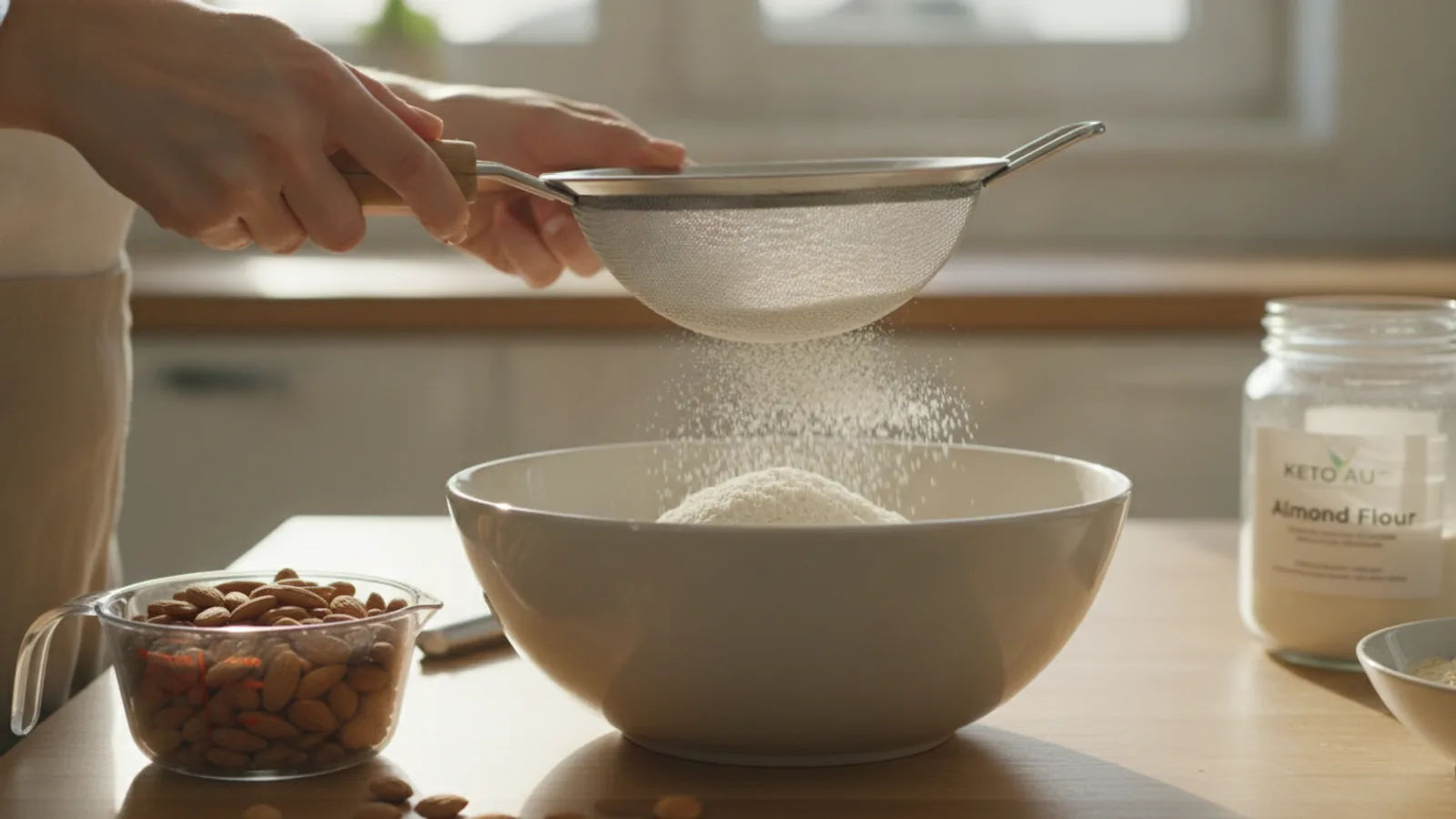
Pour about two tablespoons of the nut flour you normally use into the sieve and shake it gently over a sheet of dark paper so you can see what falls through. Almond and hazelnut flours often contain small clumps and coarse bits, and a good fine sieve should break the clumps and hold back only the gritty pieces. Watch how quickly the flour passes; if you have to press or scrape constantly, the mesh is too fine for that flour. Then rub the coarse bits left in the sieve between your fingers to judge their size. A practical check is to weigh or eyeball the amount left behind: if it is more than a small pinch for every two tablespoons, the sieve is removing too much usable flour. That test matters because the right sieve should clean your flour without wasting it.
Check the handle, crank, and grip comfort
Hold the sieve as you would during baking and shake it for a slow count of thirty. Notice whether the handle digs into your fingers, whether the rim is comfortable to grip, and whether your wrist tires quickly. If you choose a crank-style sifter, turn the mechanism several times and feel for smooth movement without catching or grinding. A comfortable grip and smooth action keep you sifting steadily instead of stopping to rest, which matters when a recipe calls for light, even flour. A practical check is to sift a full cup of nut flour in one go and see whether your hand still feels steady afterward. That check matters because sifting is repetitive work, and a tool that feels awkward will push you to skip the step entirely, leaving lumps in your batter.
Clean, dry, and store the sieve correctly
After each use, tap the sieve against your palm or a counter edge to knock out loose flour, then brush the screen with a dry pastry brush in small circles. If the flour is oily or sticky, rinse the sieve with warm water and a mild dish soap, then dry it immediately with a cloth and let it air completely before storing. Never leave a wet sieve to drip dry, because water left in the rim joint can rust the screen or loosen the frame. A practical check is to hold the dry sieve up to a light source and confirm every opening is clear; a blocked screen sifts unevenly and can harbor old flour. That check matters because fine mesh traps particles easily, and a clean screen is the only way to trust the results of your next batch. Store the sieve flat or hanging so the screen does not press against anything.
Quick Reference
| Situation | Action | Why it helps |
|---|---|---|
| You are sifting almond flour for a delicate sponge cake and want the smoothest possible crumb. | Use a sieve with roughly 50 to 60 openings per linear inch and sift the flour twice, tapping the rim gently between passes. | A tighter mesh removes the most coarse particles, and sifting twice breaks remaining clumps so the batter folds together evenly. |
| Your nut flour is clumpy because it was stored in a humid kitchen. | Spread the flour on a dry tray for a few minutes, then sift it through a medium-fine sieve and discard only the hard lumps that will not break. | Drying the surface first stops the clumps from smearing across the screen, and a medium-fine mesh clears them without blocking. |
| You only bake occasionally and want one sieve that handles nut flour, cocoa, and powdered sugar. | Choose a stainless steel sieve near 50 openings per linear inch with a diameter that fits your favorite bowl, and rinse it dry after each use. | That mesh handles fine powders without clogging, and a mid-size diameter stays useful across many recipes instead of only one. |
Common Issues
- The sieve clogs within seconds and flour barely passes through.: Stop pressing the flour and switch to a slightly coarser mesh, or sift in small batches of about two tablespoons. Nut flour is oily, so a very tight screen blocks quickly; working in small amounts and tapping rather than pressing keeps the openings clear and the flour moving.
- Coarse grit keeps landing in the bowl even though you bought a fine sieve.: Inspect the screen tension along the rim, because a slack or bent screen lets large particles slip past near the edges. If the frame is warped, replace the sieve; if it is sound, sift over a second bowl and re-sift the flour once more to catch the remaining grit.
- The rim or handle feels loose after a few washes.: Check whether the joint is welded or glued, and avoid soaking the sieve in water. Wash it briefly with mild soap, dry it at once with a cloth, and store it flat. If the joint still loosens, retire the sieve from food use rather than risk debris in your flour.
Advanced Tips
- Keep a small notebook page listing each sieve's mesh number and diameter so you can choose the right one without measuring again.
- For very fine dusting, fill the sieve only one quarter full and tap the rim with your palm instead of shaking, which gives a lighter, more even coating.
- If you grind your own nut flour, sift it while still slightly warm from the grinder, then let it cool before storing, since warm flour passes more freely.
Final Checklist
- Confirm the mesh opening is stated as roughly 40 to 60 openings per linear inch for nut flour.
- Inspect the screen for tautness, even openings, and a crimped or welded rim with no loose wires.
- Set the sieve on your most-used bowl to confirm it rests securely without tipping.
- Sift a small sample of your own nut flour and check that only a small pinch of grit remains.
FAQ
What mesh size works best for nut flour?
For most home baking, a sieve with roughly 40 to 60 openings per linear inch gives a good balance. The coarser end clears clumps quickly, while the finer end removes more grit from almond and hazelnut flour. If you bake delicate cakes, lean finer; if you sift large batches often, lean coarser to keep the screen from clogging.
Can I use the same sieve for nut flour and powdered sugar?
Yes, if you clean and dry it thoroughly between uses. Nut flour leaves an oily film that can make powdered sugar clump, so brush the screen dry after nut flour, then wash with mild soap and water only when needed. Dry the sieve completely before the next use so moisture does not turn either powder into paste.
How do I know when a fine sieve needs replacing?
Replace it when the screen sags, the rim bends, the handle or joint loosens, or you can see gaps where large particles pass through. A clean, taut screen should hold back grit evenly across its whole surface. If sifting results become inconsistent even after careful washing and drying, the mesh is no longer reliable for fine baking.