Freeze Roasted Vegetables Without Losing Texture
A practical step-by-step guide to freeze roasted vegetables without losing texture, including preparation, instructions, common issues, tips, and next steps.
Freeze Roasted Vegetables Without Losing Texture
Freezing roasted vegetables can preserve their flavor and nutrition, but the texture often suffers if you don't take a few key steps. This guide explains how to prepare, freeze, and reheat roasted vegetables so they stay firm and enjoyable, not mushy. You'll learn the best methods, common pitfalls to avoid, and how to check your work at each stage.
Fast Answer
- To keep texture, roast vegetables until just tender, not fully soft, then cool them quickly before freezing.
- Freeze in a single layer on a tray first, then transfer to airtight containers to prevent clumping and ice crystals.
Before You Start
- Choose firm vegetables like carrots, bell peppers, or Brussels sprouts; avoid high-water ones like zucchini or tomatoes.
- Roast vegetables at a moderate temperature until they are slightly underdone, so they don't turn mushy when reheated.
- Cool roasted vegetables completely in the refrigerator within one hour to prevent bacterial growth and reduce ice crystal formation.
- Line a baking sheet with parchment paper and spread the cooled vegetables in a single layer without touching.
Step-by-Step Instructions
Roast Vegetables to the Right Doneness
Start by roasting your vegetables at a moderate temperature, around 200 degrees Celsius or 400 degrees Fahrenheit, until they are just tender but still hold their shape. The key is to undercook them slightly, because freezing and reheating will soften them further. For example, if you normally roast carrots for 25 minutes, pull them out at 20 minutes. Toss them with a small amount of oil to help them brown without steaming. Spread them in a single layer on a baking sheet so they roast evenly. A practical check is to pierce a piece with a fork; it should go in with slight resistance, not slide through easily. This check matters because overcooked vegetables have broken cell walls, and freezing will turn them into mush. Remember, the goal is to preserve texture, so slightly firm is better than fully soft.
Cool Quickly and Safely
Once roasted, transfer the vegetables to a shallow container or spread them on a clean baking sheet to cool. Place them in the refrigerator uncovered for about 15 to 20 minutes, or until they reach room temperature. Do not leave them out at room temperature for more than one hour, as bacteria can multiply rapidly. A practical check is to touch the vegetables; they should feel cool, not warm. This step matters because cooling quickly reduces the risk of foodborne illness and also minimizes the formation of large ice crystals during freezing. Large crystals puncture cell walls and cause sogginess. If you cool them slowly, condensation may form, leading to freezer burn. After cooling, pat them dry with a paper towel to remove excess moisture, which helps them freeze better.
Freeze in a Single Layer First
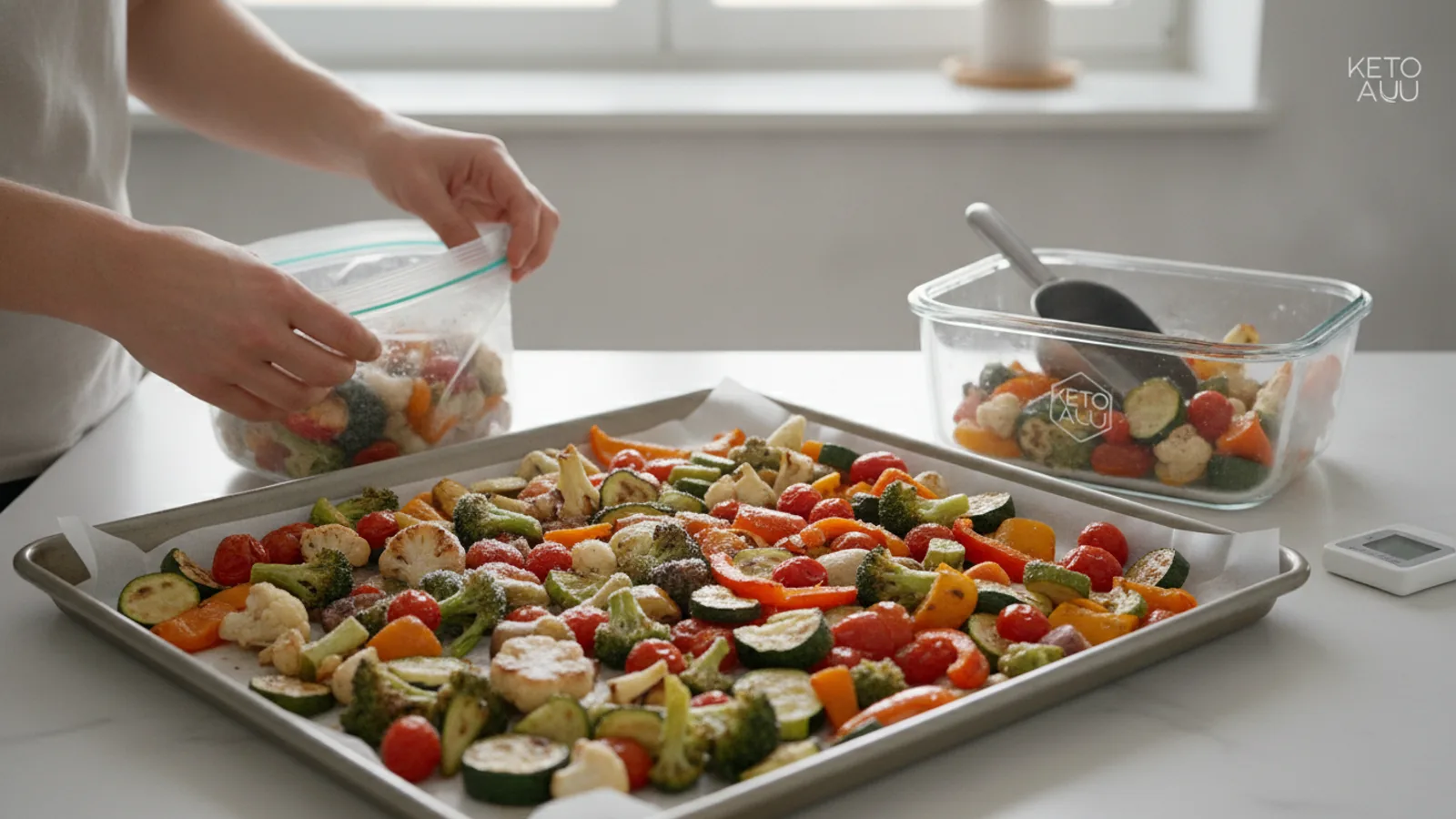
Line a baking sheet with parchment paper and arrange the cooled vegetables in a single layer, making sure they do not touch each other. Place the sheet in the freezer for about one to two hours, or until the pieces are firm. This is called flash freezing, and it prevents the vegetables from clumping into a solid block. A practical check is to gently shake the sheet; the pieces should rattle and move freely. This check is important because if they are still soft, they will stick together and you'll have to break them apart later, which damages texture. Once frozen solid, transfer them quickly to airtight containers or freezer bags. Remove as much air as possible from bags before sealing. Label with the date so you know how long they've been stored.
Pack Airtight to Prevent Freezer Burn
After flash freezing, transfer the vegetables to airtight containers or heavy-duty freezer bags. If using bags, press out all the air before sealing; you can also use a straw to suck out remaining air. Leave a small amount of headspace in containers because food expands as it freezes. A practical check is to seal the container and turn it upside down; if any air escapes, it's not airtight. This check matters because exposure to air causes freezer burn, which dries out the vegetables and ruins texture. Label each package with the date and contents. Store in the coldest part of your freezer, usually at the back, where temperature fluctuates less. Avoid stacking heavy items on top, which can crush the vegetables. Proper packing keeps them good for up to eight months.
Reheat Gently to Preserve Texture
When you're ready to eat, reheat the vegetables gently to avoid turning them mushy. The best methods are roasting in the oven, sautéing in a pan, or using an air fryer. Avoid microwaving, which steams them and makes them soggy. For oven reheating, spread frozen vegetables on a baking sheet and roast at 200 degrees Celsius or 400 degrees Fahrenheit for 10 to 15 minutes, until hot. A practical check is to taste one piece; it should be hot throughout and retain some firmness. This check ensures they are heated safely and not overcooked. If they seem dry, drizzle a little oil. You can also add them frozen directly to soups or stews, but expect them to soften more. Always reheat to an internal temperature of at least 74 degrees Celsius or 165 degrees Fahrenheit for safety.
Test and Adjust for Next Time
After reheating, evaluate the texture and flavor. If the vegetables turned out too soft, consider roasting them less next time or trying a different freezing method. If they are too firm, you might roast them a bit longer initially. Keep notes on what worked. A practical check is to compare the reheated vegetables to freshly roasted ones; they should be reasonably close in texture. This check helps you improve your technique. Remember that some vegetables, like potatoes, may never freeze perfectly, so adjust expectations. For best results, use frozen roasted vegetables within three months, as quality declines over time. Always check your freezer temperature with a thermometer; it should be at or below minus 18 degrees Celsius or 0 degrees Fahrenheit. Adjust your process based on these observations for better outcomes.
Quick Reference
| Situation | Action | Why it helps |
|---|---|---|
| You have leftover roasted vegetables from dinner. | Cool them in the refrigerator within one hour, then flash freeze on a tray before packing airtight. | Quick cooling prevents bacteria growth and reduces ice crystals, while flash freezing stops clumping. |
| You want to freeze a large batch of roasted vegetables for meal prep. | Roast vegetables slightly underdone, cool quickly, freeze in a single layer on trays, then transfer to portion-sized bags. | Portioning makes it easier to reheat only what you need, avoiding repeated thawing that harms texture. |
| Your frozen roasted vegetables have ice crystals on them. | Use them soon; if crystals are heavy, discard them, and next time ensure vegetables are dry and packed airtight. | Ice crystals indicate freezer burn or temperature fluctuations, which degrade texture and flavor. |
Common Issues
- Vegetables turn mushy after freezing and reheating.: Roast them less initially, cool quickly, and reheat using dry heat like roasting or sautéing instead of microwaving.
- Vegetables clump together in the freezer.: Flash freeze them in a single layer on a tray before transferring to containers, and make sure they are fully frozen before packing.
- Freezer burn makes vegetables dry and tough.: Pack in airtight containers or bags, remove as much air as possible, and use within recommended storage times; avoid leaving them uncovered.
Advanced Tips
- Blanch firm vegetables like carrots briefly before roasting to set their texture, then roast and freeze as usual.
- Add a small amount of cornstarch or arrowroot powder when tossing vegetables before roasting; it helps create a crisper exterior that survives freezing.
- For herbs and spices, add them after reheating rather than before freezing, as their flavors can become muted or bitter over time.
Final Checklist
- Vegetables are roasted until just tender, not fully soft.
- Cooled quickly in the refrigerator and patted dry.
- Flash frozen in a single layer before packing airtight.
- Labeled with date and stored at or below minus 18 degrees Celsius.
FAQ
Can I freeze roasted vegetables without blanching?
Yes, you can freeze roasted vegetables without blanching because roasting already cooks them. However, blanching before roasting can help firm vegetables like carrots retain texture. The key is to undercook them during roasting so freezing doesn't make them too soft.
How long can I store frozen roasted vegetables?
For best quality, use frozen roasted vegetables within three to six months. After that, they may develop freezer burn and lose texture. Always check your freezer temperature; it should be at or below minus 18 degrees Celsius. Label packages with dates and rotate stock.
What is the best way to reheat frozen roasted vegetables?
The best way is to reheat them in the oven or a skillet over medium heat until hot, which keeps them crisp. Avoid microwaving, as it creates steam and makes them soggy. Spread them in a single layer and heat at 200 degrees Celsius for 10 to 15 minutes, checking for doneness.