A closer look at almond flour
Different flours ask different things of a recipe. Start with texture, not a one-for-one substitution.
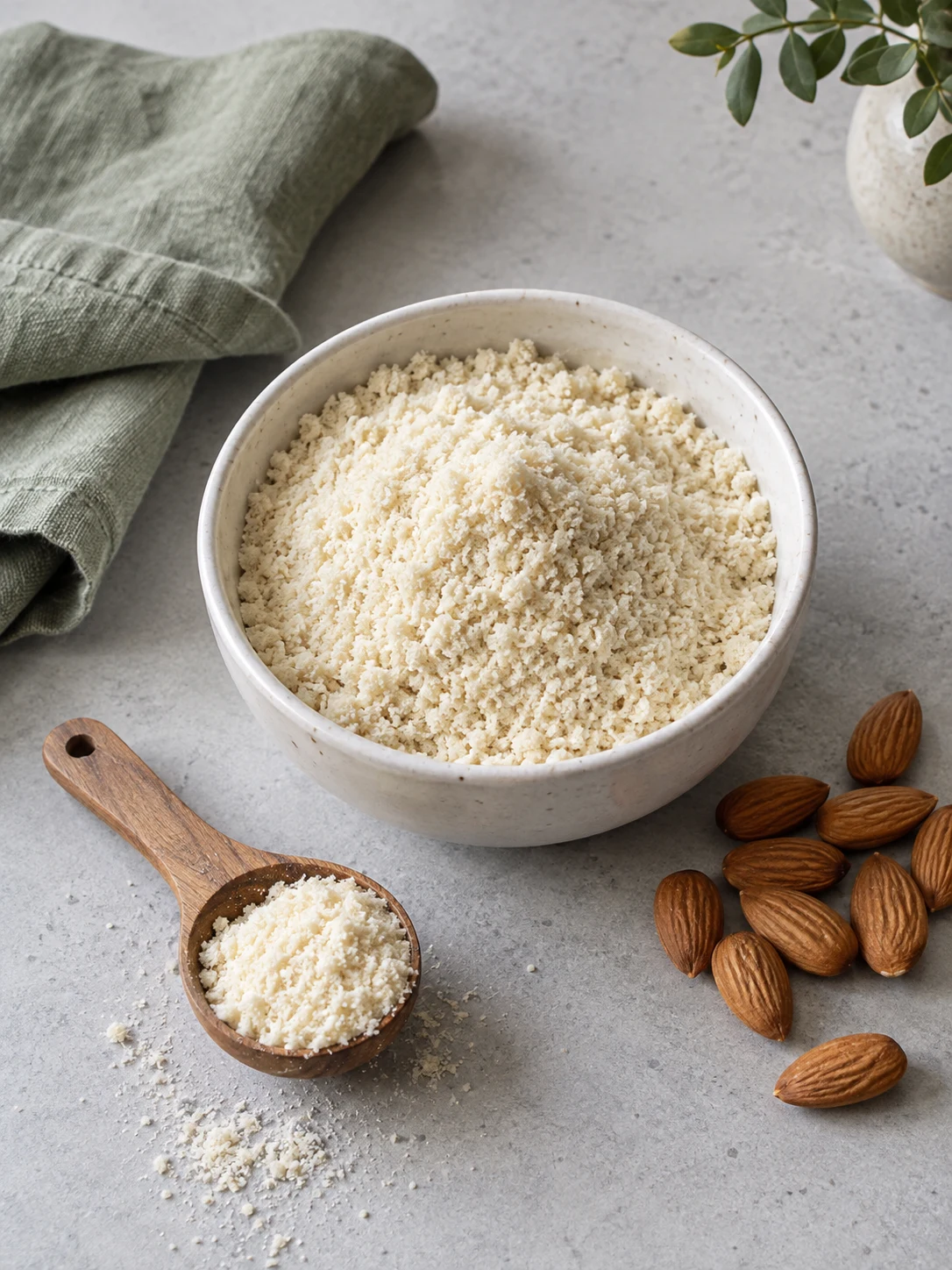
Fine flour or ground almonds?
Ground almonds can be coarser than products labelled almond flour. That difference changes the texture of a sponge or biscuit. Read the packaging and use the type specified by the recipe; even finely ground products vary between brands.
What changes in the bowl
Almond flour does not behave like wheat flour. It lacks the same gluten-forming structure and contains more fat. Replacing all the wheat flour by weight in an existing recipe can produce a fragile or oily result. Start with a recipe developed for almonds rather than trying to repair the batter afterwards.
A small-batch approach
Weigh ingredients in grams and record the brand and grind size. Let baked goods cool as directed before deciding whether they hold together. A small first batch makes it easier to learn how a particular flour behaves in your oven.
Allergens and keeping quality
Almond flour contains nuts and is not a universal alternative for a shared table. Store according to the packet, away from heat, and check freshness before baking. No flour should be described as suitable for every dietary requirement.