Mushroom Omelette Folding Technique
A practical step-by-step guide to mushroom omelette folding technique, including preparation, instructions, common issues, tips, and next steps.
Mushroom Omelette Folding Technique
Mastering the fold is what turns a messy pan of eggs and mushrooms into a tender, golden omelette that holds its shape. This guide walks through the entire process, from preparing ingredients to serving, with careful attention to heat control and timing so the eggs stay soft and the filling stays put.
Fast Answer
- Use medium-low heat and stir the eggs gently until they form soft curds, then add mushrooms and fold in thirds.
- A good fold happens when the eggs are just set but still glossy, and the pan is tilted so gravity helps the omelette roll.
- Let the folded omelette rest for a few seconds before sliding it onto the plate to help it hold together.
Before You Start
- Clean and slice 100 grams of fresh mushrooms into even pieces so they cook at the same rate and fit neatly inside the fold.
- Crack three large eggs into a bowl, add a pinch of salt, and whisk until the yolks and whites are fully combined and slightly frothy.
- Warm a nonstick pan over medium-low heat and add a small knob of butter or a teaspoon of oil, spreading it evenly across the surface.
- Have a spatula, a plate, and any extra fillings like cheese or herbs within reach so you can work quickly once the eggs hit the pan.
Step-by-Step Instructions
Prepare the mushrooms and eggs
Start by cleaning the mushrooms with a damp cloth or a quick rinse, then slice them into pieces about a quarter-inch thick. Even slices cook at the same speed and fit better inside the omelette. Heat your nonstick pan over medium-low heat and add a small knob of butter or a teaspoon of oil. While the pan warms, crack three eggs into a bowl, add a pinch of salt, and whisk until the mixture is uniform and slightly frothy. A good check is to lift the pan and tilt it; the fat should glide smoothly without smoking. If it smokes, the pan is too hot, and the eggs will brown too fast, making them tough and rubbery. Set the whisked eggs aside and keep the mushrooms near the stove so you can add them at the right moment.
Cook the mushrooms until they release moisture
Add the sliced mushrooms to the warm pan and spread them into a single layer. Let them cook without stirring for about two minutes so they begin to brown. You will see them release moisture; this is normal. After two minutes, stir and continue cooking until that liquid evaporates and the mushrooms look dry and slightly shrunken. A practical check is to listen: the sizzling should change from a watery hiss to a quieter crackle. If the mushrooms are still wet, they will steam the eggs and make the omelette soggy, so take the time to cook them fully. Season with a pinch of salt and pepper, then transfer the mushrooms to a small bowl and set aside. Wipe the pan with a paper towel if there is excess oil, then return it to medium-low heat.
Pour the eggs and form soft curds
With the pan over medium-low heat, add another small knob of butter or a teaspoon of oil if needed. Pour in the whisked eggs all at once. Let them set for about ten seconds, then use a spatula to gently push the cooked edges toward the center, tilting the pan so the raw egg fills the gaps. Continue this push-and-tilt motion, stirring slowly, until the eggs form soft, glossy curds and no fully raw liquid remains on top. The surface should look slightly wet but not runny. This check matters because if the eggs are too runny, the omelette will tear when you fold it; if they are too dry, it will crack. Work quickly and keep the heat low so the bottom does not brown. You want a pale yellow, tender sheet of eggs, not a browned pancake.
Add the mushrooms and begin the first fold
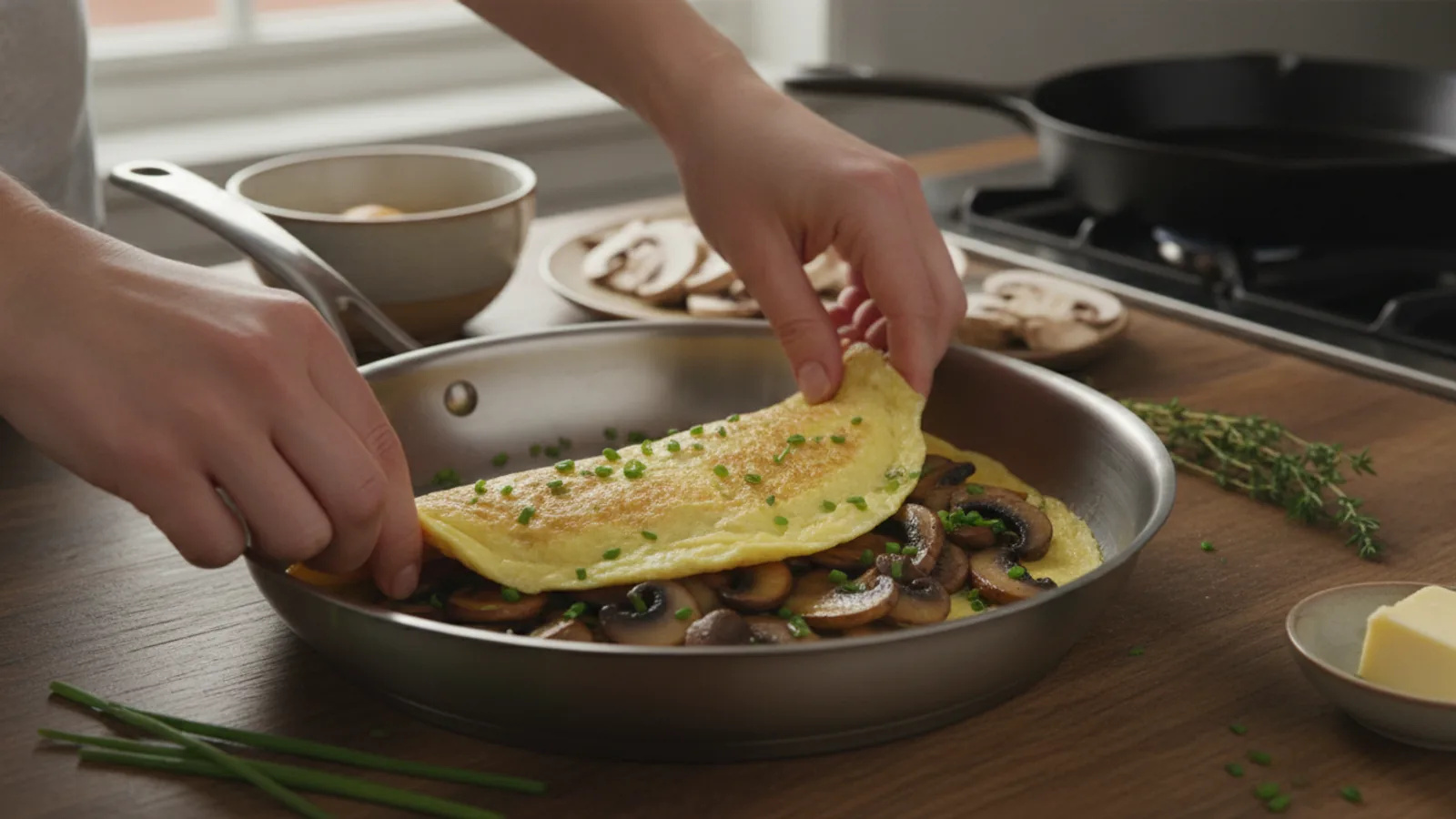
Once the eggs are softly set but still slightly glossy on top, scatter the cooked mushrooms over one half of the omelette. If you like, add a sprinkle of grated cheese or chopped herbs now. Let the omelette sit undisturbed for about twenty seconds so the bottom sets fully. Then, using your spatula, lift the edge of the empty half and fold it over the filling. Work from the side nearest you and fold toward the far side, or vice versa, depending on your pan. A good check is to slide the spatula under the folded half and gently press down; the omelette should hold its shape without leaking. If it leaks, the eggs were too runny, so next time cook them a few seconds longer before folding. This first fold creates a half-moon shape and traps the filling inside.
Complete the final fold and shape the omelette
After the first fold, you have a half-moon omelette. To make a classic trifold, tilt the pan away from you and use the spatula to fold the near edge of the omelette toward the center, then fold the far edge over the top. Alternatively, for a simple half-fold, gently slide the omelette onto a plate and use the plate to flip it back into the pan to cook the other side for a few seconds. The goal is a neat, compact package. A practical check is to shake the pan gently; the omelette should slide freely. If it sticks, add a tiny bit more butter or oil around the edges. Let it cook for another twenty to thirty seconds so the inside is fully set. The exterior should be smooth and barely golden, with no runny egg seeping out.
Slide onto a plate and rest before serving
Turn off the heat and let the omelette rest in the pan for about fifteen seconds. This brief rest allows the eggs to firm up slightly, making it easier to transfer without tearing. Then, hold a plate upside down over the pan and carefully invert the pan so the omelette lands on the plate. Alternatively, tilt the pan and slide the omelette onto the plate, using the spatula to guide it. A good check is to see that the omelette holds its folded shape and does not unfold. If it does unfold, you can gently push it back together with the spatula. Serve immediately, as the omelette is best when hot and tender. Garnish with fresh herbs or a sprinkle of pepper if you like. This final step ensures a clean presentation and a pleasant texture.
Quick Reference
| Situation | Action | Why it helps |
|---|---|---|
| The eggs are setting too quickly and browning on the bottom before you can add the filling. | Slide the pan off the heat immediately and continue stirring the eggs with a spatula for a few seconds to cool them down. Then return the pan to the heat only if needed. | Removing the pan from the heat stops the cooking process and prevents the eggs from becoming tough and rubbery. The residual heat in the pan will continue to cook the eggs gently without burning them. |
| The omelette tears when you try to fold it, and the filling starts to spill out. | Use a wider spatula or two spatulas to support the omelette as you fold. If it still tears, fold it in thirds instead of halves, which requires less lifting. | A wider spatula distributes the weight more evenly, reducing the chance of tearing. Folding in thirds means you only lift a smaller section at a time, making it easier to handle a delicate omelette. |
| The mushrooms release a lot of water and make the omelette soggy. | Cook the mushrooms in a separate pan first until their moisture evaporates and they are lightly browned. Then add them to the omelette just before folding. | Cooking mushrooms separately removes excess water, so they do not steam the eggs and dilute the texture. This step ensures the filling is dry and concentrated in flavor. |
Common Issues
- The omelette sticks to the pan and breaks apart when you try to fold it.: Make sure your pan is properly heated and coated with enough butter or oil before adding the eggs. A nonstick pan in good condition helps. If the omelette still sticks, slide a thin spatula under it to loosen it before folding. Next time, use a bit more fat and lower the heat slightly.
- The eggs become dry and rubbery instead of soft and tender.: Reduce the heat to medium-low and stir the eggs gently as they cook. Remove the pan from the heat as soon as the eggs are just set but still glossy. Overcooking is the main cause of rubbery eggs, so err on the side of undercooking and let the residual heat finish the job.
- The filling falls out during folding because the omelette is overstuffed.: Use less filling; about two to three tablespoons of cooked mushrooms is enough for a three-egg omelette. Spread the filling evenly over one half and leave a small border around the edges. If you want more filling, make a larger omelette with more eggs or serve extra filling on the side.
Advanced Tips
- For a richer flavor, whisk a tablespoon of cream or milk into the eggs before cooking. The extra fat makes the omelette more tender and adds a subtle sweetness.
- To get a perfectly smooth exterior, strain the whisked eggs through a fine-mesh sieve before pouring them into the pan. This removes any chalazae and makes the omelette silky.
- Practice the fold with a plain omelette first, then gradually add fillings. Mastering the motion with just eggs builds muscle memory and confidence for more complex versions.
Final Checklist
- Ensure all ingredients are prepped and within reach before you start cooking, including sliced mushrooms, whisked eggs, and any seasonings.
- Heat the pan over medium-low and add enough butter or oil to coat the bottom evenly without smoking.
- Cook the mushrooms until their moisture evaporates and they are lightly browned, then set them aside.
- Stir the eggs gently until they form soft curds but are still slightly glossy on top.
- Add the filling to one half, fold the omelette carefully, and let it rest briefly before sliding onto a plate.
FAQ
Can I use any type of mushroom for this omelette?
Yes, most mushrooms work well, but their water content varies. Button and cremini mushrooms are firm and release moderate moisture. Shiitake and oyster mushrooms are more delicate and cook quickly. If you use wild mushrooms, ensure they are safe to eat and cook them thoroughly. No matter the type, sauté them first to remove excess water so the omelette does not become soggy.
How do I prevent the omelette from browning too much?
Keep the heat at medium-low and use a nonstick pan. Butter can brown quickly, so consider using a mix of butter and oil or clarified butter. Stir the eggs constantly and remove the pan from the heat if you see the bottom darkening. The goal is a pale yellow omelette, which indicates gentle cooking and a tender texture.
What is the best way to fold an omelette without tearing it?
Use a flexible spatula and fold the omelette while it is still slightly moist but set. Tilt the pan and use gravity to help the omelette roll. If it tears, do not panic; you can patch it with a small piece of cooked egg or simply fold it again. Practicing with a plain omelette helps you develop the right touch before adding fillings.